
In this part, we will look at some of the uses that writing and words have had over time, as well as some of the technology that has facilitated writing.
Seals, stamps, and signatures
Writing has long been used for more than literal communication and artistic calligraphy. From very early on, certain acts of writing were thought to have an effect on the world. These real world effects were implemented, in many cases, by social agreement. For example, a person signing their name on a document may receive land as their property as a result. The proximate causes of the land being in fact the property of the person are the norms and (threat of) physical enforcement that prevent others from using the land, but in the minds of those involved it is the words on the page which causes the land to be the person’s property.
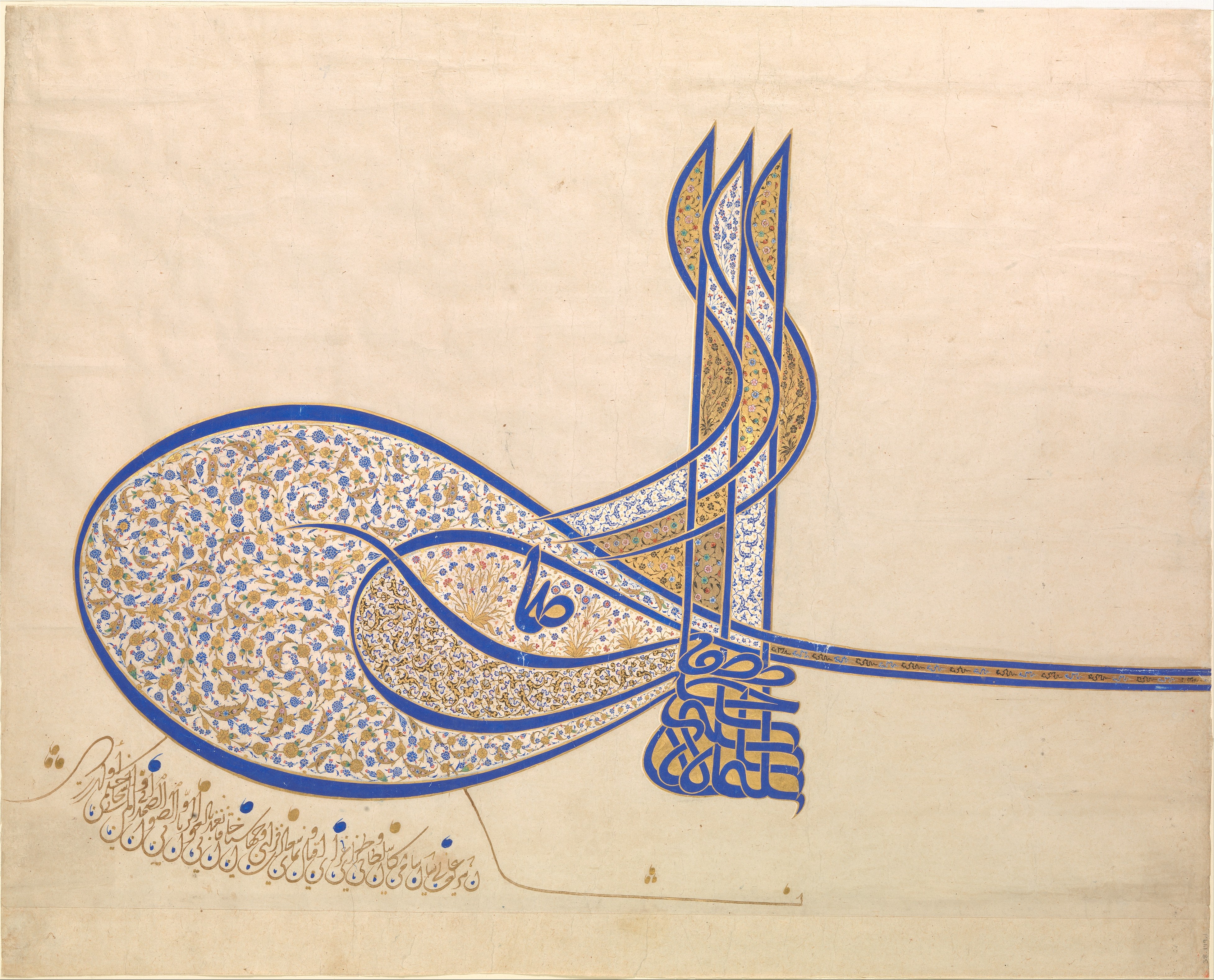
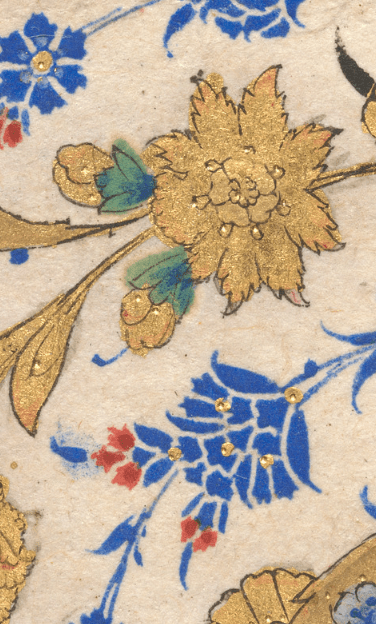
Seals are one of the earliest and longest-used forms of writing-making. By engraving stone or metal and making imprints in clay or wax, one can endlessly and easily reproduce a specific text or image. In Mesopotamia and Egypt, early writers created cylinder seals, which could be rolled across a surface to create a repeating imprint.
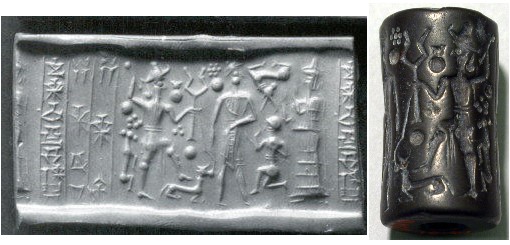
These cylinder seals, first used in Mesopotamia, served as a mark of ownership or identification. Seals were either impressed on lumps of clay that were used to close jars, doors, and baskets, or they were rolled onto clay tablets that recorded information about commercial or legal transactions. The seals were often made of precious stones. Protective properties may have been ascribed to both the material itself and the carved designs.
The Met
Chinese ink seals
In China and East Asia, stamp-like seals were adopted to represent the authority of the emperor or other governmental official. These are typically square and usually used with red ink made from cinnabar.

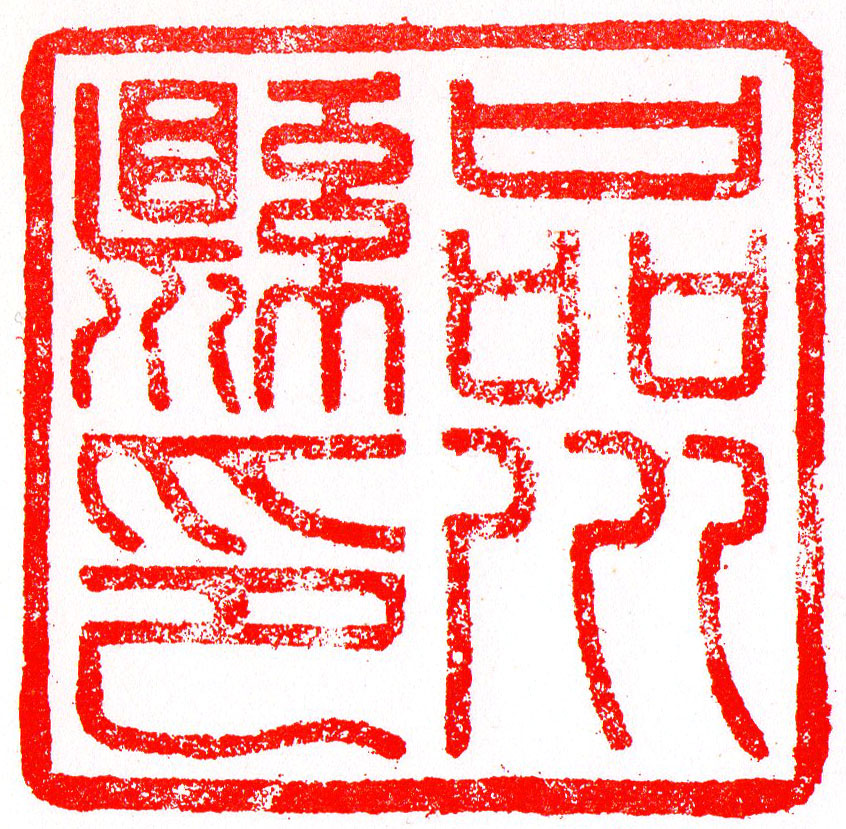
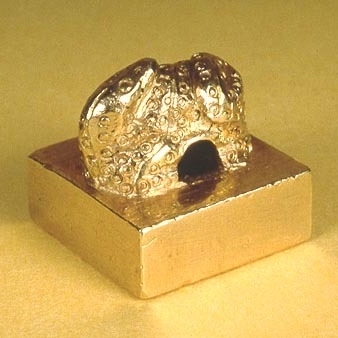

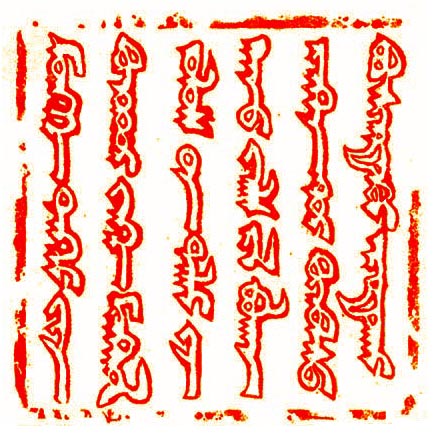
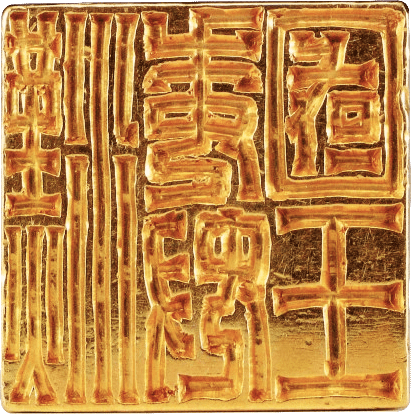

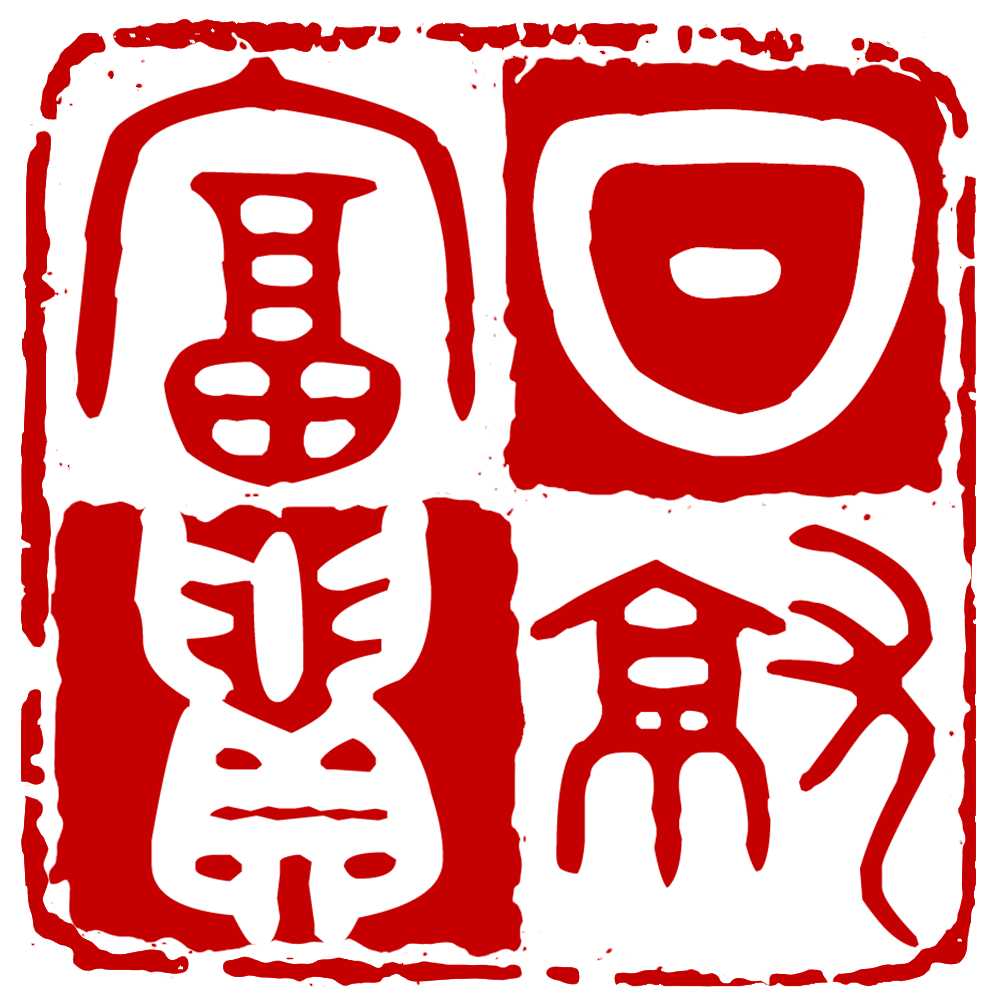
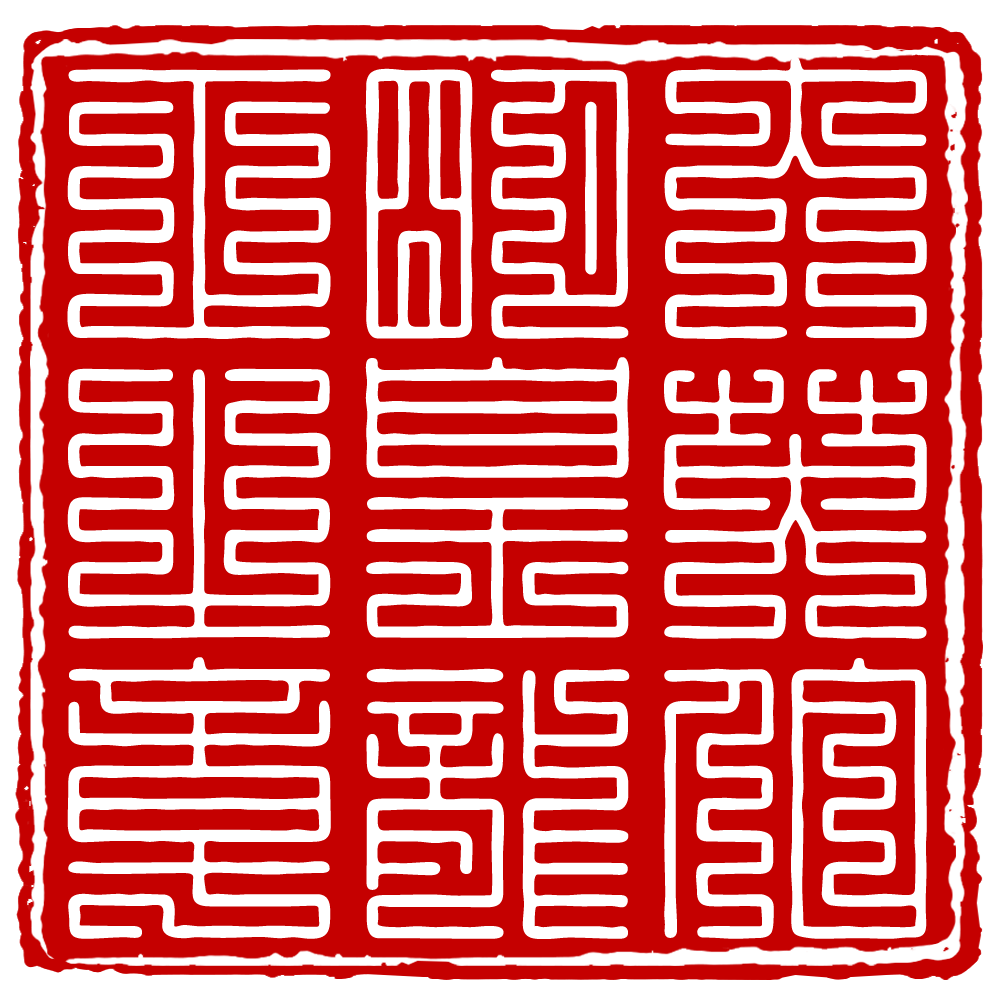
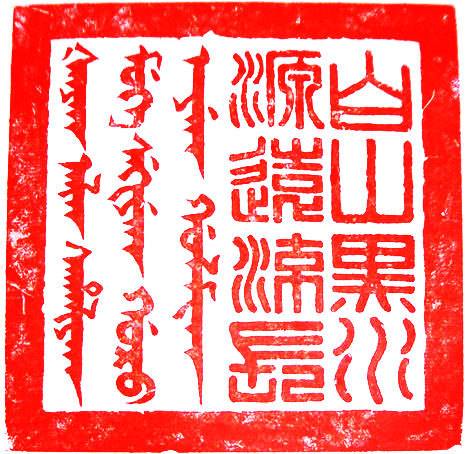
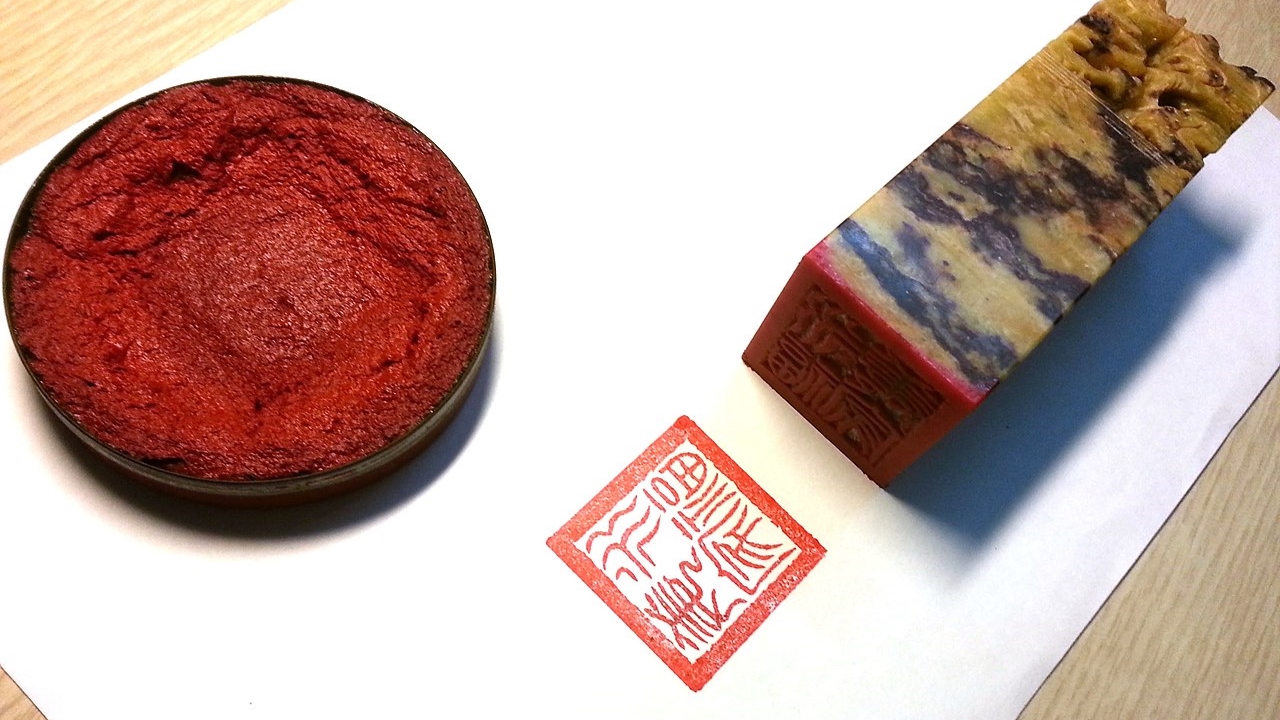
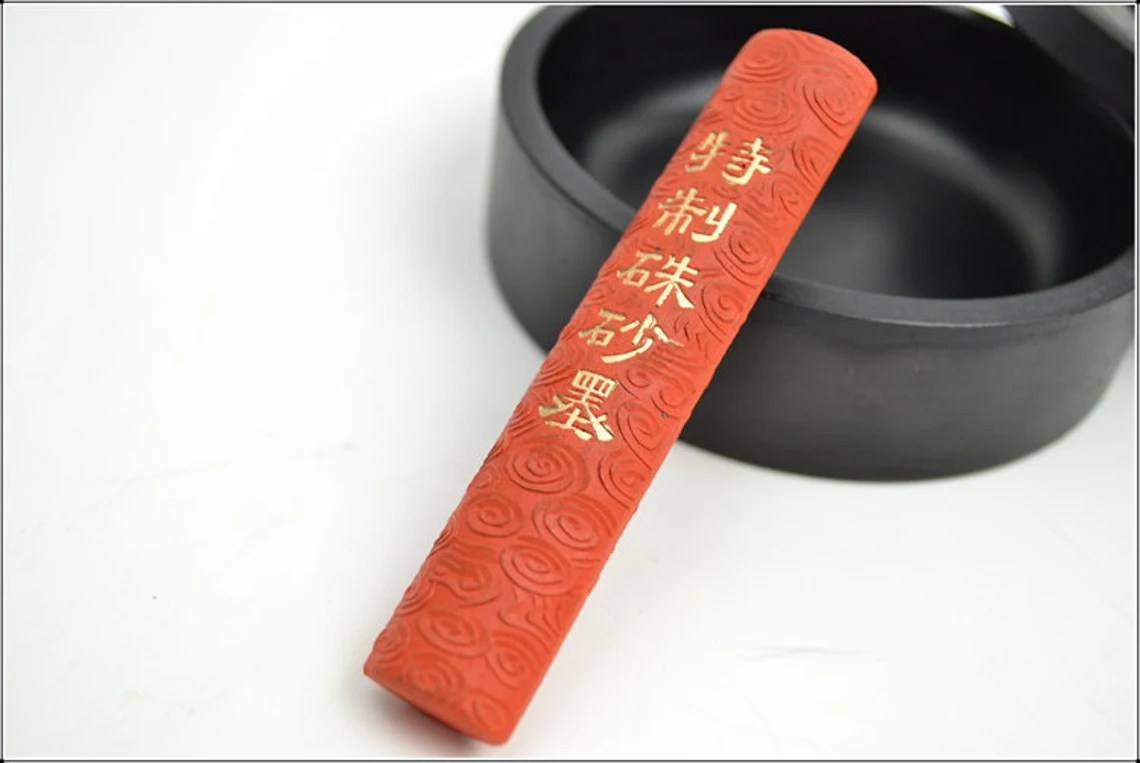
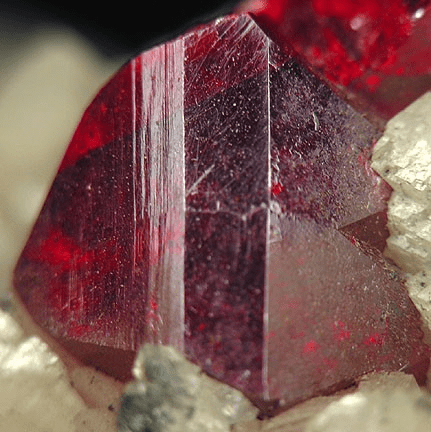
These seals, called chops, are still in use today in some areas of business and government in East Asia.
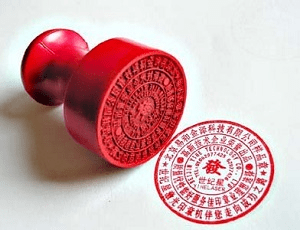
In China, company chops – sometimes referred to as a seal or stamp – are mandatory for doing business and replace signatures that are used in Western countries. A company seal is the tangible representative and legal evidence of the company’s activities abroad.
Wong 2020
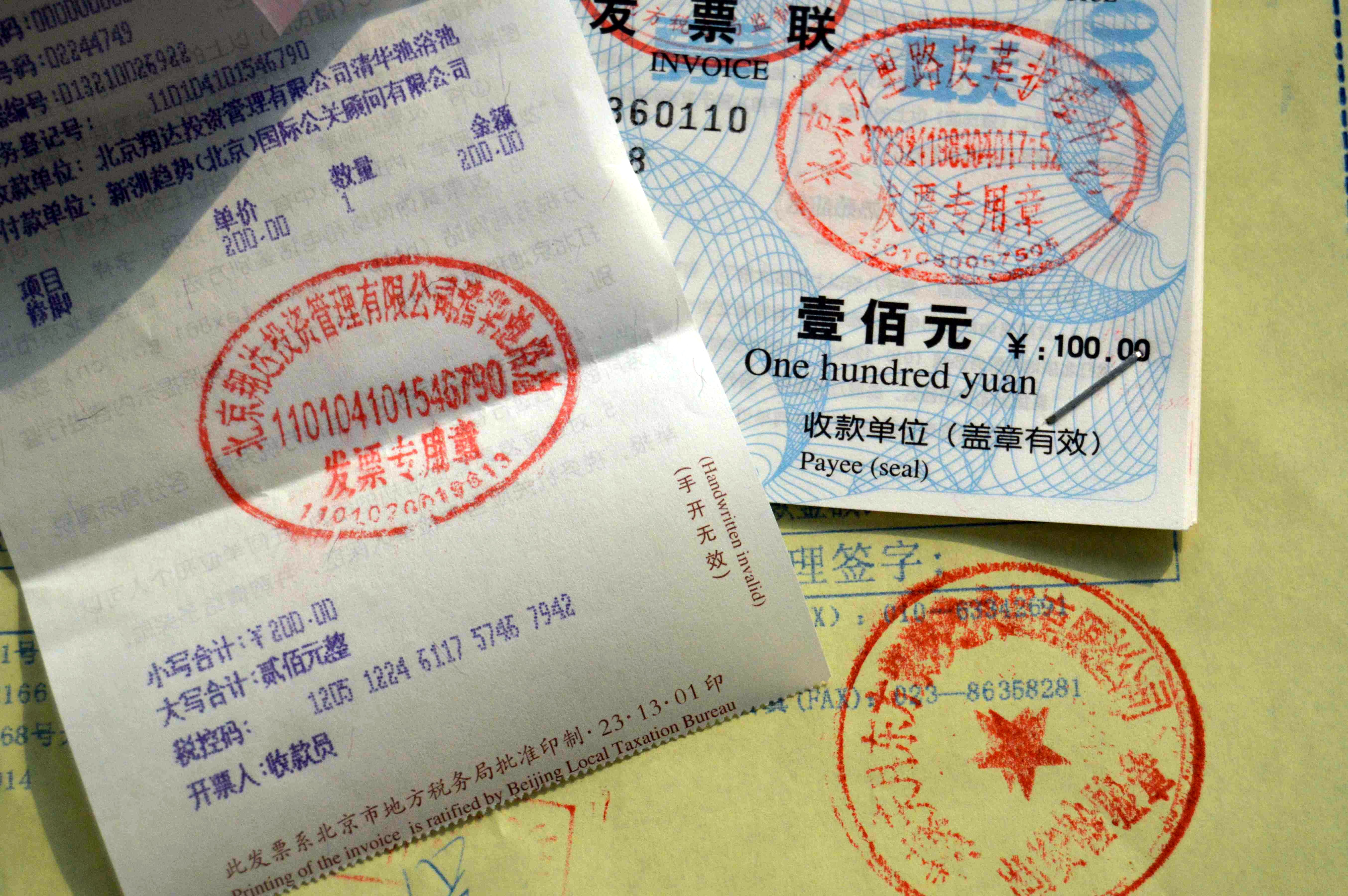
There is another way that chopping business documents prevents fraud. When an agreement, minutes of a meeting, or other legally binding document consists of several pages these are fanned out and the chop is stamped in such a way that each page carries part of its impression. This makes it impossible for anyone to insert other pages at a later stage and claim that they were part of the original.
herschelian 2014
In Japan, a hanko or inkan (personal seal) acts like a signature. A person might have multiple versions, such as a less secure, generic one with just a last name used to sign for packages and a more secure, unique one used to sign bank transactions. As in China, there are many official contexts in which such a seal is mandatory. (Japan Living Guide 2023.)
Signature stamps can also be used in the United States and other countries, where they legally count as a signature but their use is optional (typically used for convenience when many documents must be signed). Contrary to popular belief, a legal signature in the US does not need to be handwritten and does not need to be the person’s name.
A signature may be made (i) manually or by means of a device or machine, and (ii) by the use of any name, including a trade or assumed name, or by a word, mark, or symbol executed or adopted by a person with present intention to authenticate a writing.
Uniform Commercial Code § 3-401(b) (Cornell Law School Legal Information Institute)
Signet rings
In Europe, the Middle East, and elsewhere, people long used signet rings, or sometimes signet amulets, to make personal seals (often imprinted in wax). An early reference to this practice can be found in the Old Testament of the Bible.
Then Pharaoh took his signet ring from his hand and put it on Joseph’s hand, and clothed him in garments of fine linen and put a gold chain about his neck.
Genesis 41:42 (ESV)
Whether this story is true or not, Egyptian pharaohs did indeed use signet rings.
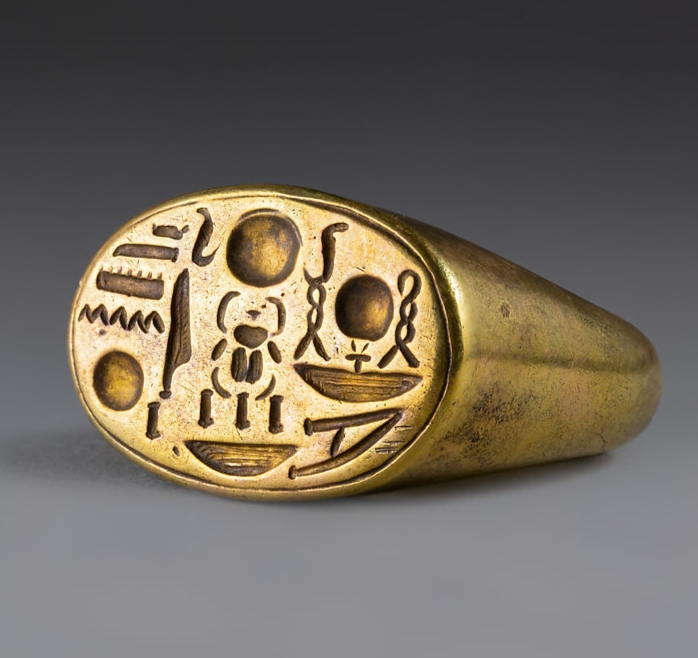
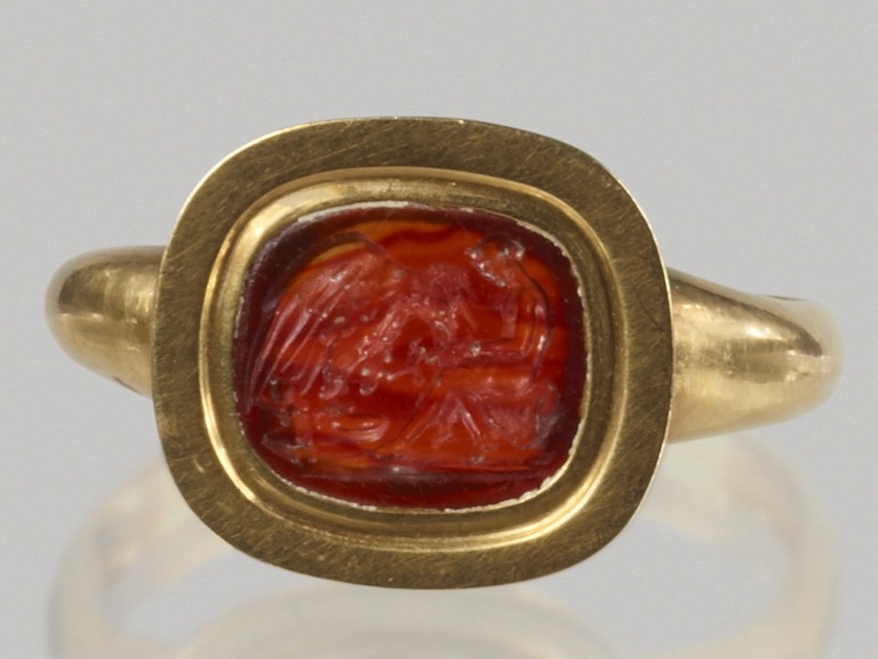
Signet rings could include text, images, or both. In the case of images, these are often depictions of figures or scenes from mythology, depictions of people, or depictions of common objects and activities.
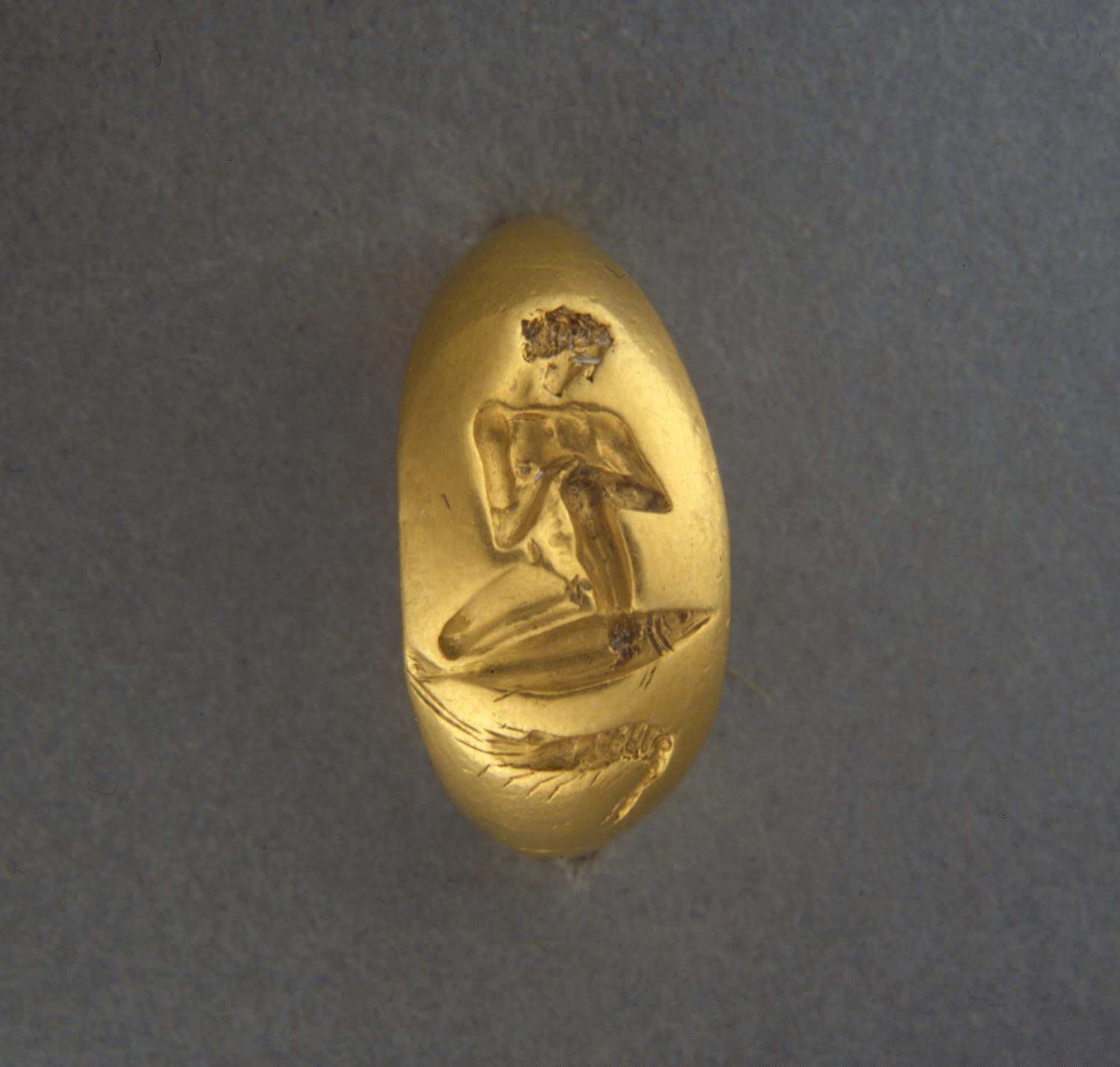
Left: Ancient Greek gold signet ring depicting a seated youth along with a fish and a lobster or prawn, c. 500-300 BCE. (The State Heritage Museum)
Right: Roman gold signet ring with engraved carnelian gem depicting Ganymede with Zeus as an eagle, c. 100 BCE-100 CE. (The State Hermitage Museum)
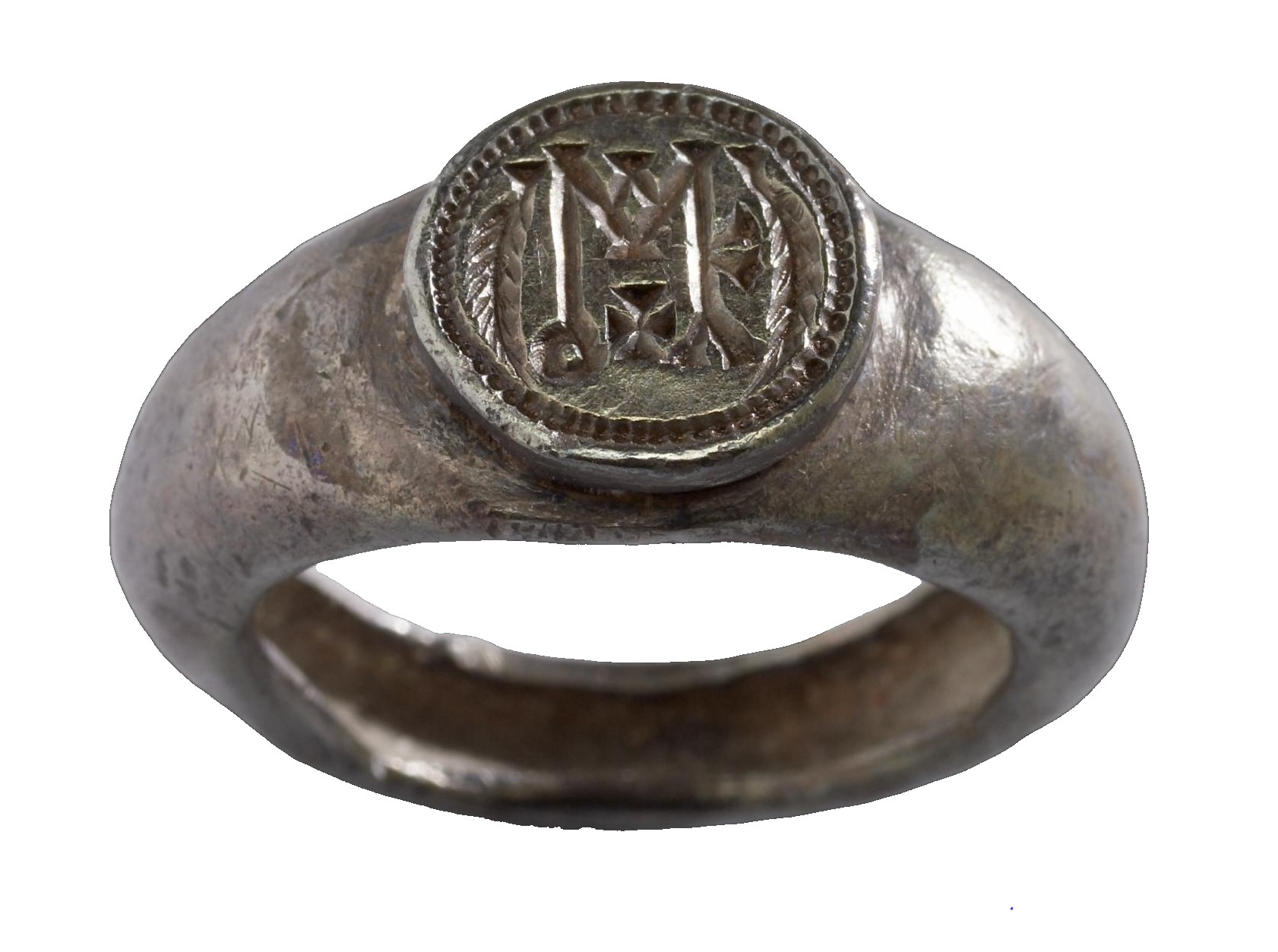
Left: Byzantine silver signet ring with monogram, c. 500-700 CE. (The Walters Art Museum)
More than simply jewelry, signet rings were essential in the Early Byzantine period for sealing personal documents and validating wills and testaments. By the 6th century, most rings had a personal monogram, such as the block-letter format on this silver one that reads “of Mark.”
The Walters Art Museum
Signet rings could represent an individual, a family or clan, a government office or other official position, or membership in an organization.
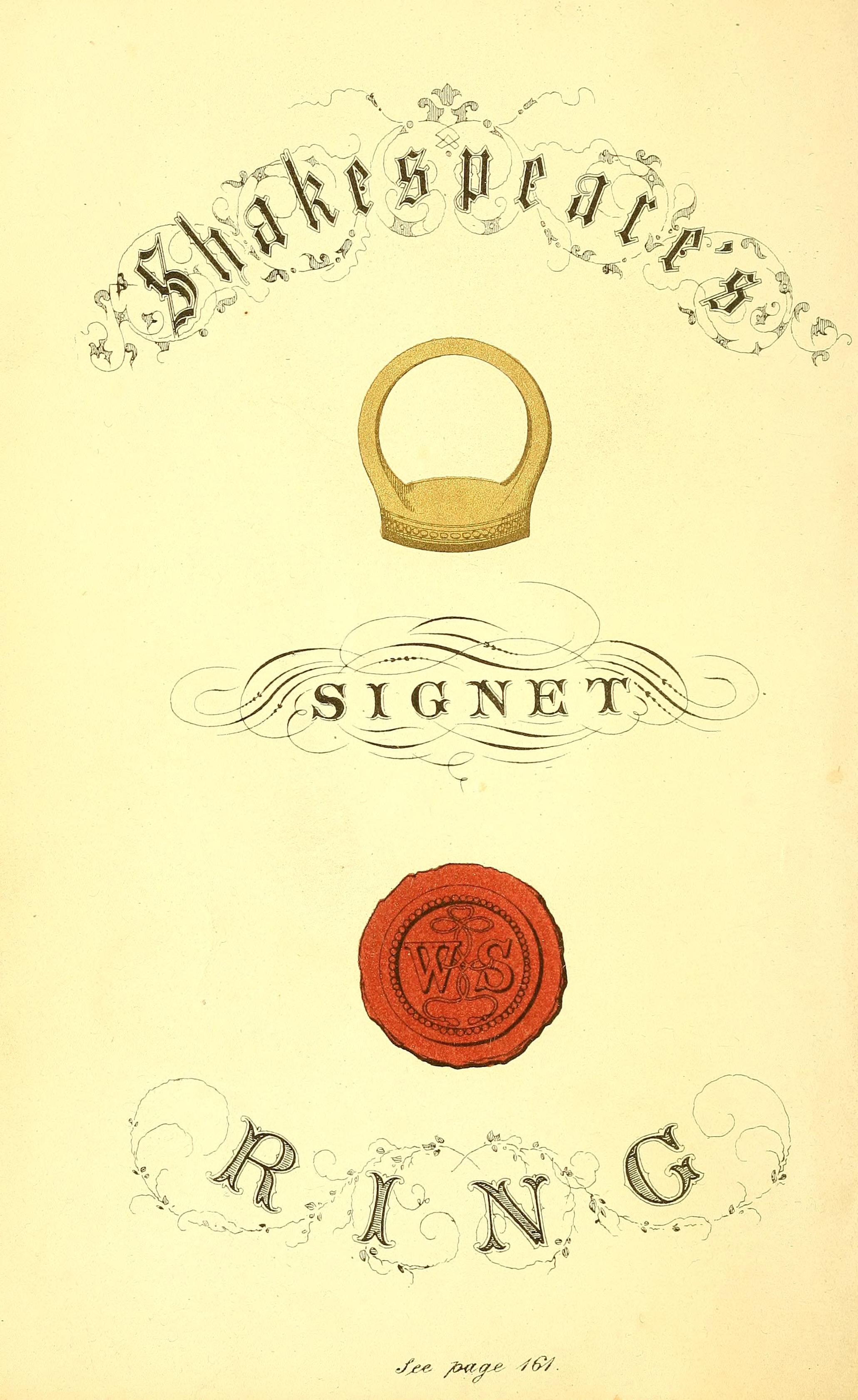
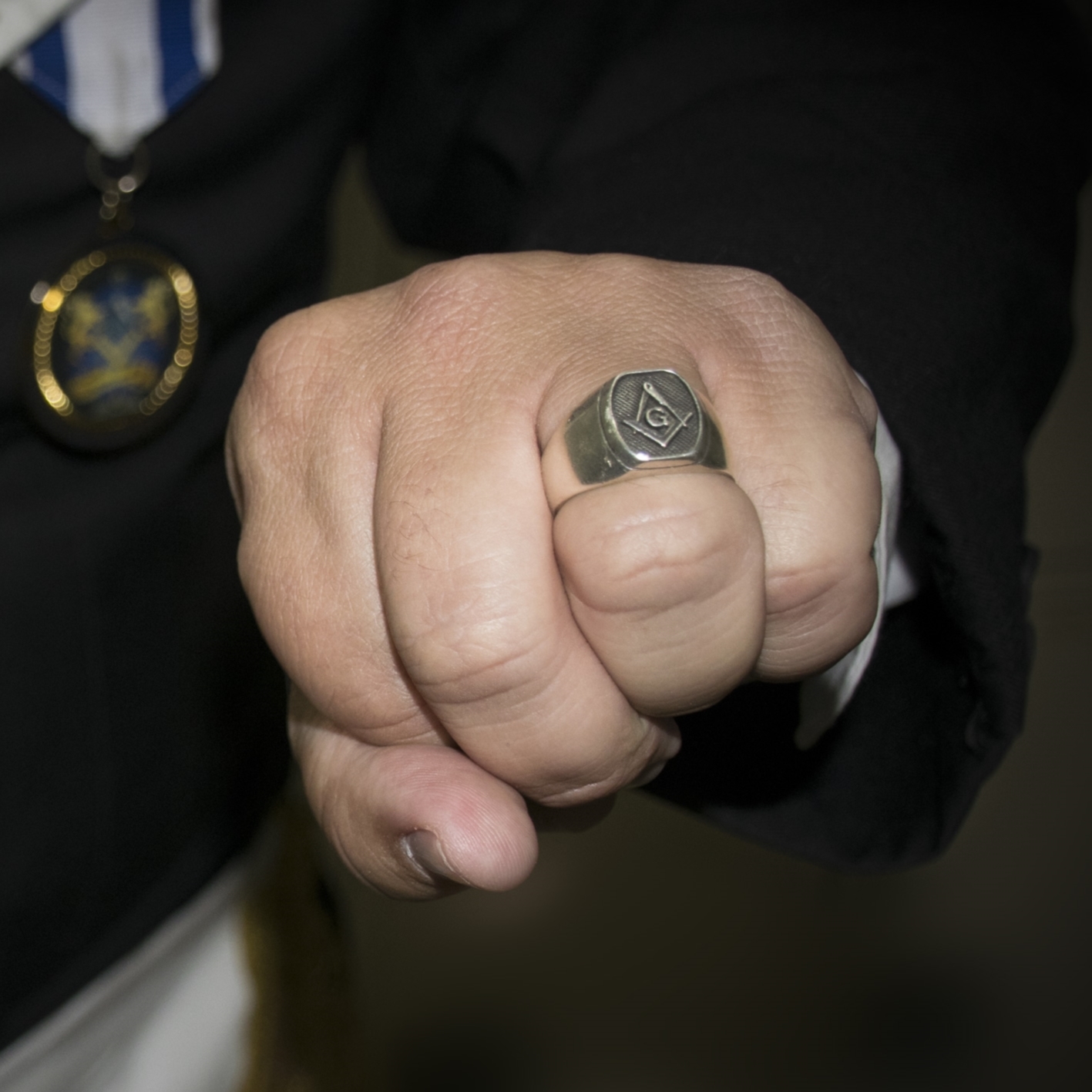
[Masonic rings] rose to prominence in the craft during the 18th and 19th centuries. Masonry was at the height of its popularity and rings allowed brethren to identify one another in public.
For many today, the Masonic ring represents a brother’s commitment to the secrets, lessons, and traditions of the craft. Because the lodge itself doesn’t provide each member with a ring, they are usually given as a gift, often from father to son, or grandfather to grandson, when the younger member is raised a Master Mason. As such, Masonic rings are deeply personal emblems, and their significance will vary from member to member.
…
More functionally – although less common today, Masons used to wear rings as a way to seal letters with wax.
…
How a Brother chooses to wear a ring and what symbols are emblazoned on it is a personal choice.
The Grand Lodge of Ohio
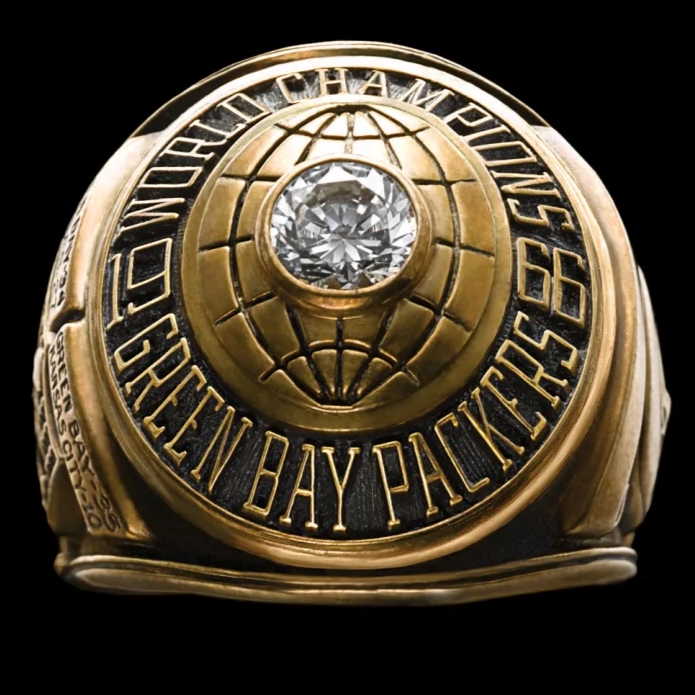
Signet rings also inspired the modern practices of class rings, championship rings, and so on.
Other official stamps
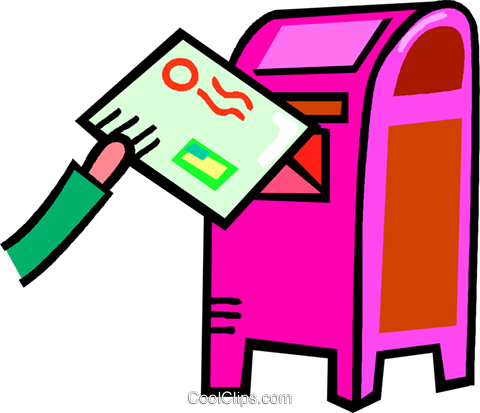
A postage stamp is notably not a stamp or seal in the sense we have been discussing, but rather a small piece of paper issued by the government and used to prepay postage fees. Mail has been traditionally stamped (in the sense of a rubber ink stamp) with postmarks and sometimes other marks. While a postmark records when and where mail was processed, cancellation lines (or “killer” lines) deface the postage stamp so that it cannot be reused.

The use of a circular postmark and wavy cancellation lines has been so ubiquitous in the US for so long that these shapes have became representative of the idea of “mail” to many people regardless of whether they know what they mean.
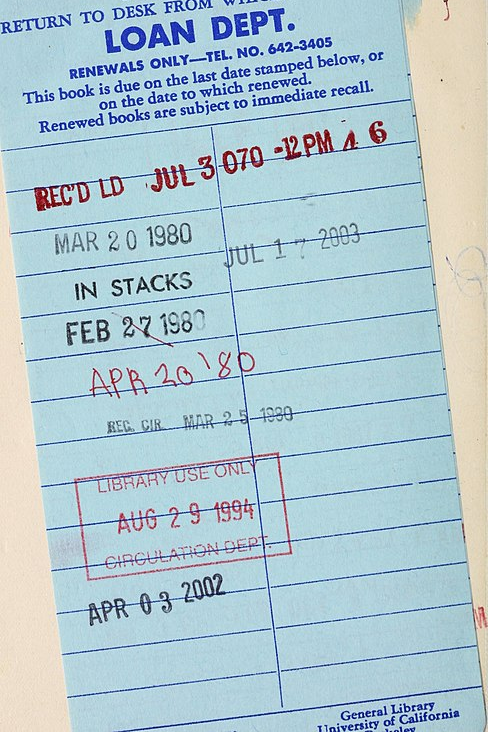
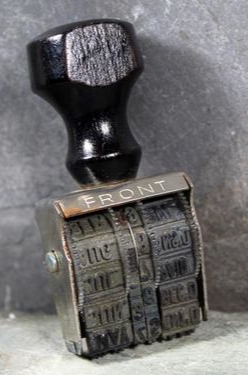
Another common type of stamp is a number stamp or alphanumeric band stamp. This can use an odometer mechanism to advance the number displayed by one each time the stamp is used. The stamping motion pushes the rightmost wheel to the next position, and when a wheel rolls over from 9 to 0, it advances the next wheel to the left. Alternatively, the wheels can be adjusted manually to stamp a specific number repeatedly. This is the type of stamp that has traditionally been used in public libraries for marking due dates.
Next-gen stamping technology
Consider if you had one ink stamp for each letter in the roman alphabet. You could stamp out an entire document letter-by-letter. You might want two sets of stamps, one for capitals and the other for small letters (you might even store these stamps in two different cases). It would be convenient not to have to stamp things out letter-by-letter, however. An easier approach would be to have many copies of these stamps, with a way to place them into the appropriate positions to form a sort of “mega stamp” that stamps out an entire page. Since this “mega stamp” would be very large and difficult to work with by hand, you could attach it to a machine that can lower the stamp and press it against the paper.
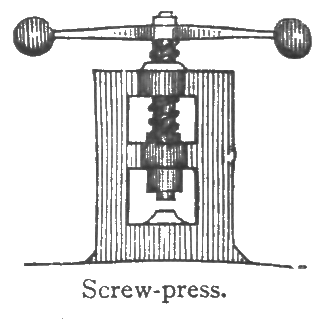
What I just described, though it may be obvious, is movable type and the printing press. Movable type was invented by Pi Sheng (or Bi Sheng) in China around 1040 and the printing press by Johannes Gutenberg in Germany around 1450. Printing technology was made possible by the development of a mechanism called a screw press. (Lechêne 2000.)
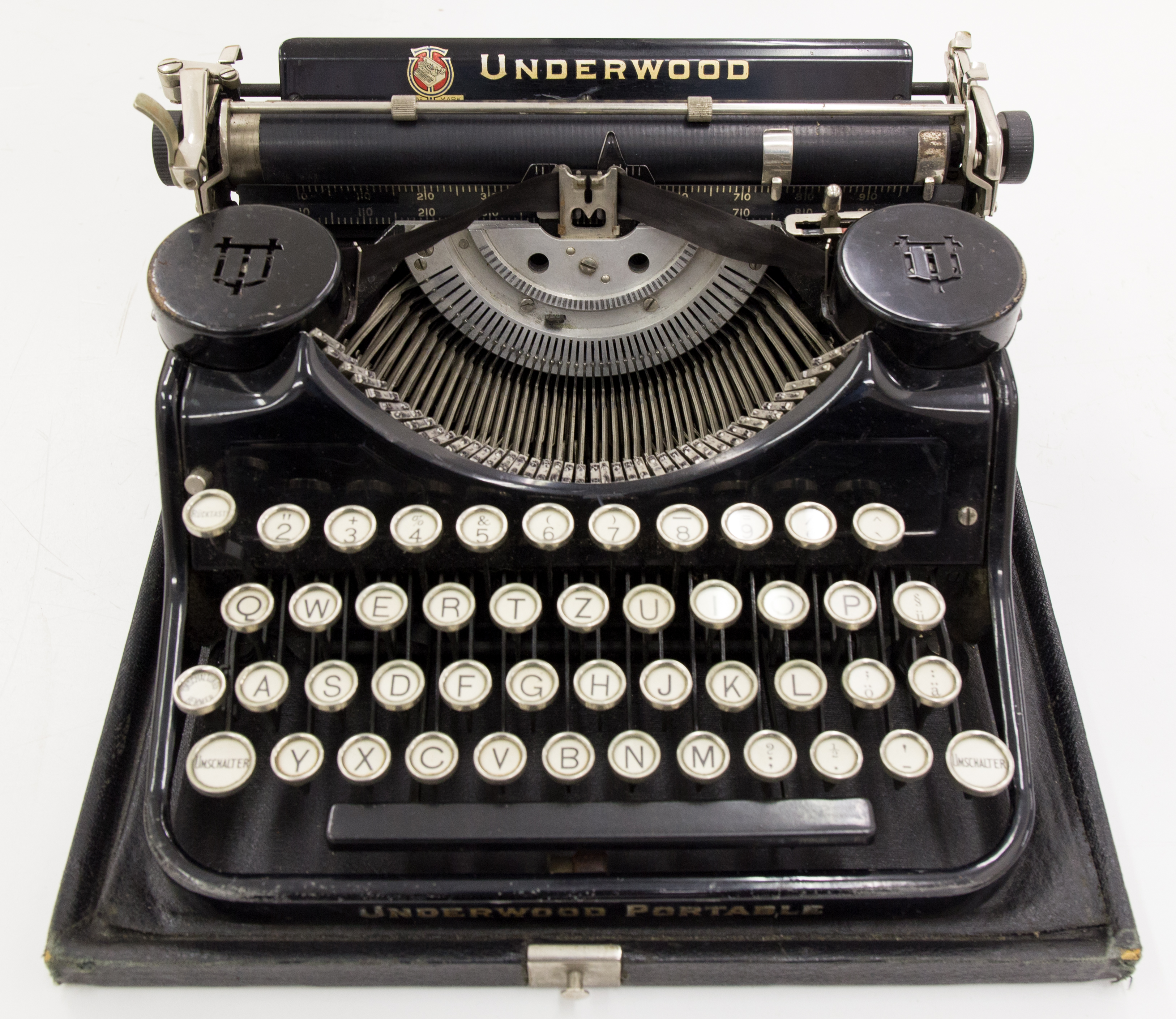
Suppose you do want to write a document letter-by-letter, for example if you want to be able to come up with what you’re going to write as you go. It would be convenient to be able to quickly switch between the individual letter stamps. I’ll cut to the chase this time: this is the idea behind the typewriter. In a typewriter, notably, switching between the sets of capital letters and small letters requires a mechanical shift.
The YouTube channel Technology Connections has an excellent video regarding typewriters.
The computer keyboard is an evolution of the typewriter, and we retain some terminology, including “[carriage] return” for the next line and the notion of “locking” the shifted position (“caps lock” or “shift lock”). The QWERTY keyboard layout for English is also a relic of typewriters, though alternatives exist that many find to be more ergonomical, such as the Dvorak layout. Other languages may use a different layout, even if they use the Latin alphabet. For example, in France the standard layout is called AZERTY.

References
Cornell Law School Legal Information Institute. UCC § 3-401. SIGNATURE. www.law.cornell.edu/ucc/3/3-401
herschelian (2014). Chop it to make it legal. Jasmine Tea & Jiaozi. https://herschelian.wordpress.com/2014/03/26/chop-it-to-make-it-legal/
Japan Living Guide (2023). Hanko/Inkan: A Guide to the World of Japanese Signature Seals. https://www.japanlivingguide.com/living-in-japan/culture/hanko-inkan/
Lechêne, R. (2000). History of printing. Britannica. https://www.britannica.com/topic/printing-publishing/History-of-printing
National Football League (NFL). The Super Bowl Rings. https://www.nfl.com/photos/the-super-bowl-rings-09000d5d82618287
The Grand Lodge of Ohio. The Meaning of Masonic Rings. https://www.freemason.com/masonic-rings-meaning/
The Metropolitan Museum of Art (The Met). https://www.metmuseum.org
The State Hermitage Museum. https://www.hermitagemuseum.org
The Walters Art Museum. https://art.thewalters.org
Wong, D. (2020). Company Chops in China: What Are They and How to Use Them. China Briefing. https://www.china-briefing.com/news/company-chops-in-china/
 thoughts on mind
