
The following question was asked on catholic.com:
I got into a discussion about truth, and I had the opinion that there is only one Truth and that is God. So what is truth? Is it something we believe in completely, body and soul? Or is it something God reveals to us? How do we know it’s something revealed? Are there many truths?
Fr. Vincent Serpa O.P. responds.
I suppose the most basic definition of truth would be: the conformity of the intellect with what the thing perceived actually is. This would be objective truth. In our culture many want to make such truth relative. “You have your truth and I have mine.” Such is not truth. If one’s perception of something does not conform to what it actually is, then one is in error—no matter how convinced one is and certainly no matter how one feels about it. People who are colorblind are not seeing all the true colors before them.
I think this is a misunderstanding, or possibly a straw man, of “subjective” truth. That is, by my definition, truth accessible only to a specific individual. Even in case of hallucination, there is an objective fact of the matter about what the person is seeing. Perceptual reality is a part of reality.
Moreover, I don’t think one’s perception can be correct in the way Serpa implies. Normal color vision fails in many ways. It can detect only a small portion of the electromagnetic spectrum, it can’t function when light is too bright or too dim, it can’t distinguish between very similar wavelengths of light, and it can’t distinguish between pure yellow light and a combination of red and green light, for example. It is well known that several types of animals see more colors than humans (in some cases many more, like the mantis shrimp). So, is anyone seeing “all the true colors before them”? Certainly not. What is the truth, then, of a statement like, “that car is red”? This statement means that the light reflecting off the car falls within a range of wavelengths that I and most others identify as red. What about a colorblind person who says, “that car is brown”? This means that the light falls within a range that people who are also red-green colorblind would identify as brown. That range happens to include both red and green. The person with normal color vision has a description that is more precise, but no more accurate than the person who is colorblind.
Colorblindness is not a misperception of color. It’s an inability to distinguish between certain colors, just as people with normal color vision can’t distinguish between yellow and a combination of red and green. We call a picture of a yellow car on a computer screen “yellow” even though the light reaching our eyes is not yellow light. Would Serpa go so far as to claim seeing yellow on a computer screen is a false perception? Maybe. This effect could be considered a kind of optical illusion. It seems strange, however, to deny the perceptual reality that we really are seeing yellow when red and green light enter the eye at the same location simultaneously. There is no difference in the nerve firings. The picture of the yellow car really is visually yellow. It is true for me that when I look at it I see yellow. This is a fact that is generally inaccessible to others, whether they see it as yellow or not.
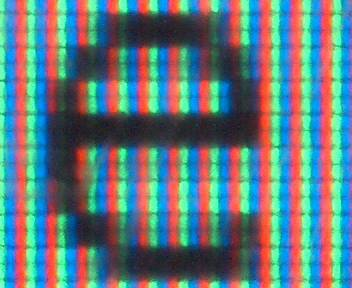
There is an objective fact of the matter as to what wavelengths of light a car reflects, but humans’ ability to identify that fact is limited. It can be measured scientifically, which provides the most accurate and precise description that humans are capable of. Using normal perception alone, however, we can arrive only at a rough approximation.
I find Serpa’s response all in all philosophically lazy. Postmodernism and relativism are popular punching bags, but most critics seem not to understand what they’re criticizing in the first place. It suggests a shallow naïve realism, the idea that “my perception gives me direct access to objective reality.” I see this also come up in how disagreements are framed. Such people tend to be confident that their own worldview is objectively correct, and can’t really understand where other people are coming from. To them, other people are just wrong because they misperceived or were deceived. Often this comes in the form of suggesting brainwashing by schools and/or the media as well as deception by the devil.
Serpa concludes his response with the following.
Unfortunately, there is so much dishonesty in our society about the very nature of truth that many are confused. Since God is the source of all that is and knows his creation perfectly, he is the fullness of all truth.
 thoughts on mind