
Logic sometimes breeds monsters.
Henri Poincaré
In math, we often speak of things being “nice,” “well behaved,” “elegant,” or even “beautiful.” The flip side of this is those things in math which often remain in shadow: the unfriendly, the unruly, the awkward, and the ugly. In some cases, inelegant solutions are apparently unavoidable. In other cases, we actually seek these things out intentionally.
Generalization and existence
There are two types of claims we make in math: general (or universal) claims and existence claims. A general claim states that all objects belonging to a certain class possess a certain property. This is like the claim all men are mortal. An existence claim states that there is an object having a certain property or belonging to a certain class. This is like the claim there is a man named Socrates. In logic, these correspond to the universal quantifier “for all” (∀) and the existential quantifier “there exists” (∃) respectively.
These types of claims are related through negation. The negation of all men are mortal is there is a man who is not mortal. Similarly, the negation of there is a man named Socrates is all men are not named Socrates. More formally,
¬∀x P ⇔ ∃x ¬P
Where P is some logical statement involving x.
This is why, in order to disprove a universal, you need only find one example that contradicts it. This is called a counterexample.
Examples of counterexamples
If we have a general statement that things behave nicely, then, the statement can be disproved by showing something that does not behave nicely. Something that is “not nice” in the extreme is often called pathological, though this is a subjective term.
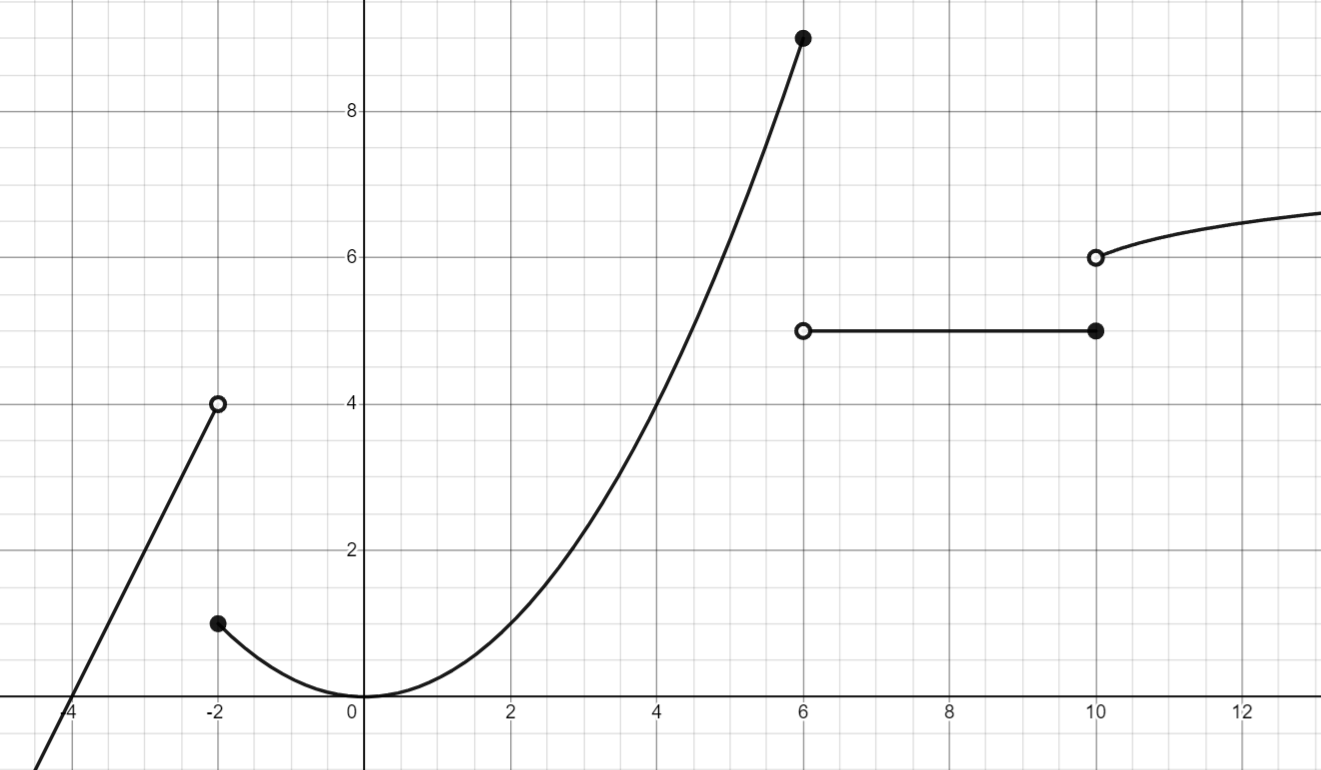
Let’s think about the following statement: “Every function that is defined over the real numbers is either continuous or has continuous pieces separated by discontinuities.” Intuitively, this makes sense. If a function is not continuous but is defined everywhere, then it must look like a piecewise function. …Right?
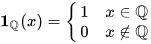
Not quite. There exists a function which is defined everywhere but continuous nowhere. Namely, a function that is 1 for every rational number input and 0 for every irrational number input. Between any two rational numbers there is an irrational number, and between any two irrational numbers there is a rational number, so there is no way for the graph to connect the individual points together. The graph consists of uncountably many isolated points. This is called the Dirichlet function.
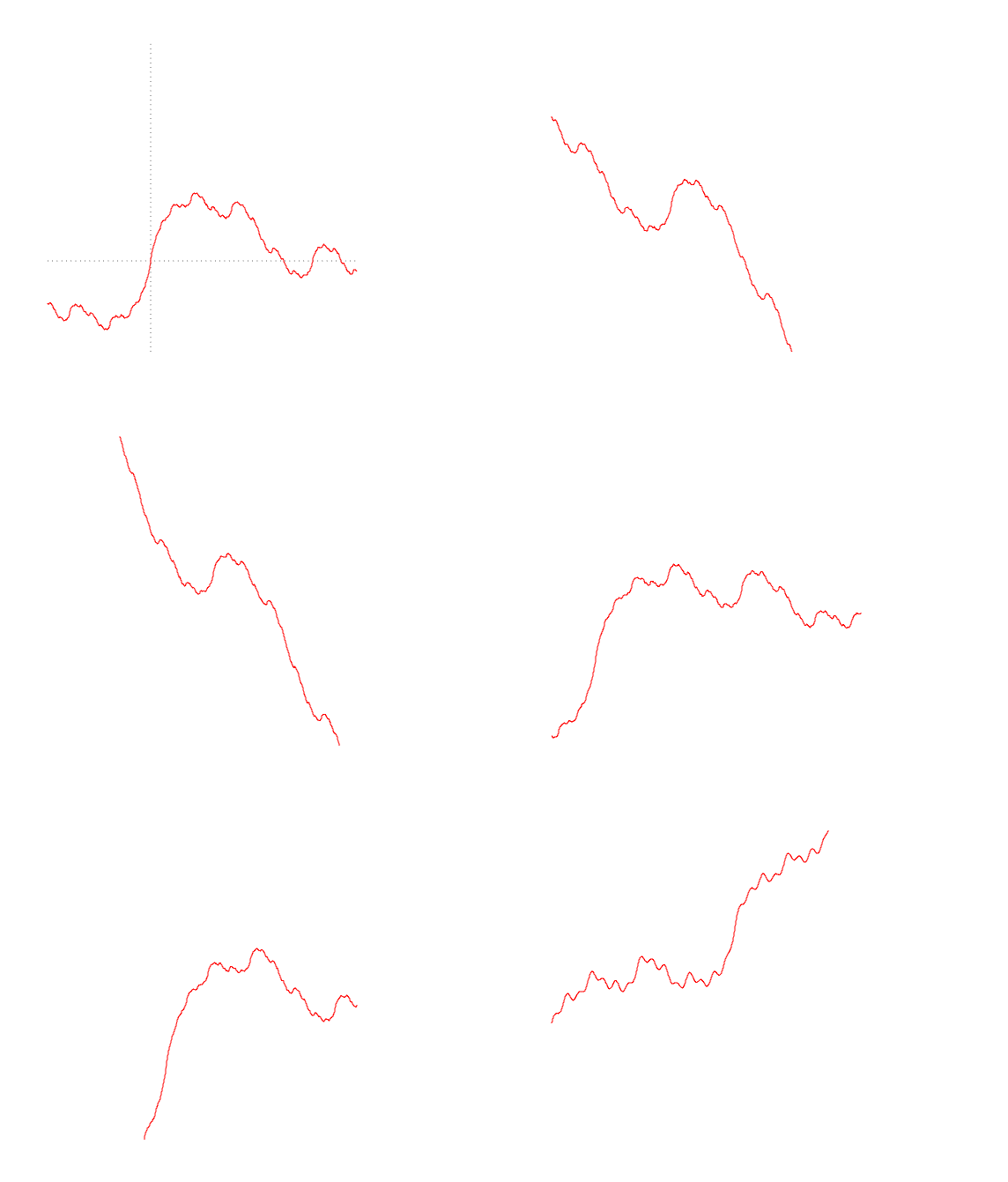
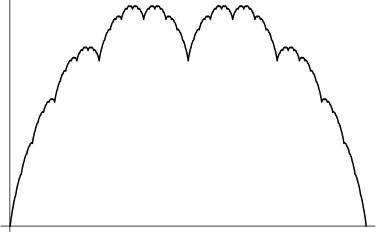
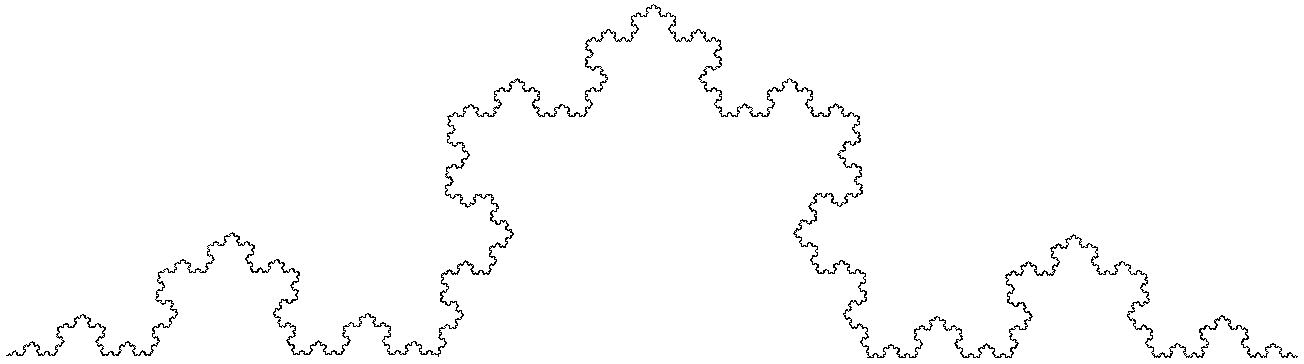
Another classic counterexample in calculus is the existence of “pathological” functions which are continuous everywhere but differentiable nowhere. Intuitively, this means a function which is “infinitely rough” (not smooth at all). These include the Weierstrass function, the Blancmange function, and other fractal curves exhibiting self-similarity.
The usefulness of pathological mathematics
Modern mathematics began with Cantor’s set theory and Peano’s space filling curve. Historically, the revolution was forced by the discovery of mathematical structures that did not fit the patterns of Euclid and Newton. These new structures were regarded … as … ‘pathological,’ … as a ‘gallery of monsters,’ akin to the cubist painting and atonal music that were upsetting the established standards of taste in the arts at about the same time. The mathematicians who created the monsters regarded them as important in showing that the world of pure mathematics contains a richness of possibilities going far beyond the simple structures that they saw in nature. Twentieth century mathematics flowered in the belief that it had transcended completely the limitations imposed by its natural origins.
Now, as Mandelbrot points out … Nature has played a joke on the mathematicians. The 19th century mathematicians may have been lacking in imagination but Nature was not. The same pathological structures that the mathematicians invented to break loose from 19th century naturalism turns out to be inherent in familiar objects all around us.
Freeman Dyson, as quoted by Mountain Man Graphics (emphasis mine)
Fractals, non-Euclidean geometry, and other abstract, would-be esoteric areas of math have found astonishing utility in describing nature. This includes chaos theory, in which chaotic systems are deterministic yet unpredictable. This is important in, for example, weather forecasting.
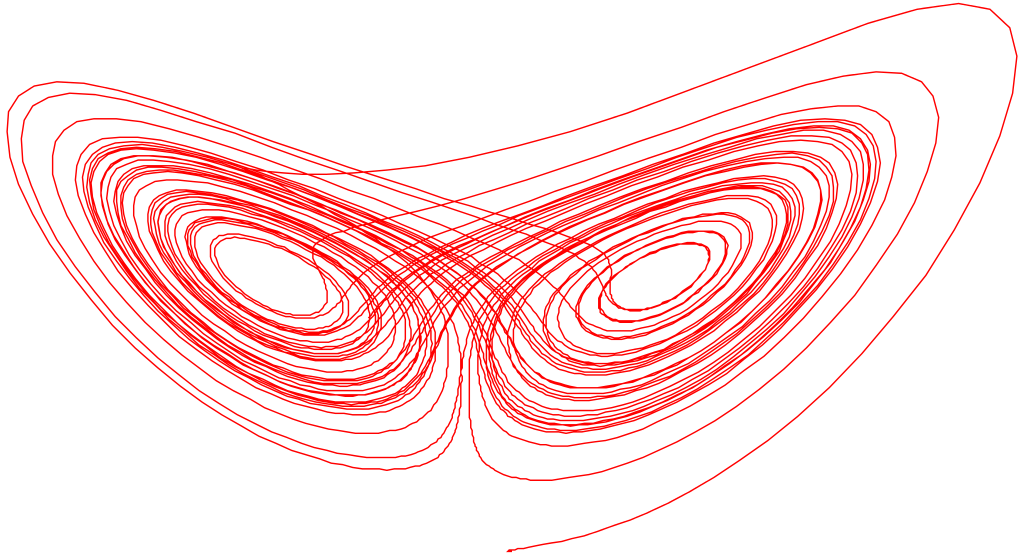
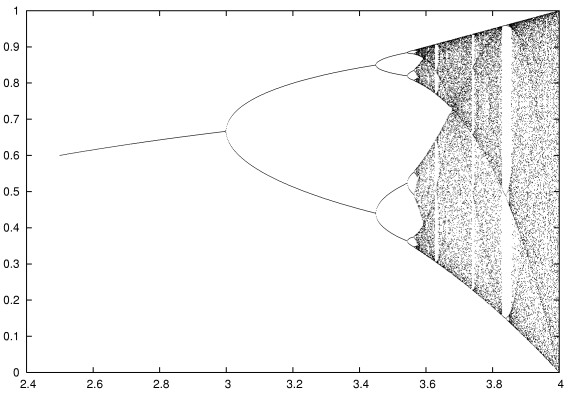
Now, we have come full circle to things that are widely considered beautiful. However, I don’t see these things as beautiful in the same way that a simple, elegant solution is beautiful. Chaos and pathological behavior is enthralling. Rather than a matter of simply observing something with beauty, it’s like gazing into the abyss. It’s more the call of the void than it is aesthetic appreciation.

References and further reading
Conroy, M. Weierstrass functions. https://sites.math.washington.edu//~conroy/general/weierstrass/weier.htm
Mountain Man Graphics. The Fractal Geometry of Nature by Benoit B. Mandelbrot (1977). http://mountainman.com.au/fractal_00.htm
Venkatesh, T. S. S. and Vikranth, V. (2020). Investigating the relation between chaos and the three body problem. https://www.researchgate.net/publication/343986739_Investigating_the_relation_between_chaos_and_the_three_body_problem
Wikipedia. Pathological (mathematics). https://en.wikipedia.org/wiki/Pathological_(mathematics)
Wolfram MathWorld. Pathological. https://mathworld.wolfram.com/Pathological.html
 thoughts on mind
