
One of the core issues in the philosophy of science is realism vs. antirealism. This concerns two things, the ontological status of entities referred to in scientific laws and what the aim of science is (or should be). Realism is the view that entities referred to in scientific laws genuinely exist to the extent that the scientific law is accurate, that modern scientific laws are largely literally true, and that the aim of science is to describe reality truthfully and literally. Antirealism is best described as a category of objections and alternatives to this view. For example, instrumentalism takes the view that objects such as electrons do not exist, or at least we have no idea if they exist. They are useful for reasoning and making predictions, and their literal existence is irrelevant. Similarly, the aim of science in instrumentalism is to produce scientific laws that make accurate predictions, without regard to literal truthfulness.
One argument against realism is the “pessimistic induction,” an observation that, if our current scientific laws are literally true, than all previously superseded laws have been literally false, and so it is only reasonable to assume that future developments will supersede current understandings and our current laws will come to be seen as literally false. An example of this is the caloric theory of heat, which views heat as a flowing substance. While this theory produces accurate predictions under many circumstances, it has been superseded by the kinetic theory of heat which views heat as the kinetic energy of tiny particles. Both theories cannot be literally true, and likewise any potential future theory that supersedes the kinetic theory of heat would likely not be compatible. Many past theories posit the existence of entities or substances which are now regarded as not existing, for example phlogiston and the luminiferous aether. The inductive conclusion is that entities posited by current theories, such as electrons or spacetime, are likely to turn out not to exist.
This is related to Thomas Kuhn’s concept of a paradigm shift in science (the term is now used colloquially in areas outside philosophy of science). For example, studying certain phenomena yields results which contradict Newtonian physics, e.g. the double-slit experiment. Newtonian physics could not be modified to account for these results; it required a complete paradigm shift in order to explain. Newtonian physics and quantum physics, though they make the same predictions in many cases, are in fact talking about different things entirely. Because of this, they cannot both be accurate and literally true descriptions of reality.
A more nuanced position is structural realism, which states that entities posited by science may or may not exist, but that our descriptions of them are still literally approximately true, and that the aim of science is to produce as literally truthful descriptions as possible. The key is that our descriptions in science are mathematical. Despite the ontological incompatibility between the caloric and kinetic theories of heat, they are mathematically similar (when restricted to certain ordinary phenomena). Similarly, Newtonian physics and quantum physics are ontologically incompatible, but quantum physics “reduces to” Newtonian physics when the number of particles involved is extremely large. Moreover, general relativity “reduces to” Newtonian physics when objects are small and moving at slow speeds. In mathematical terms, we could almost say that these theories are merely generalizing Newtonian physics to a wider range of phenomena, rather than overturning Newtonian physics.
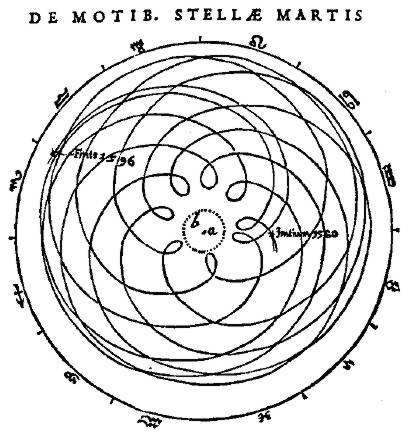
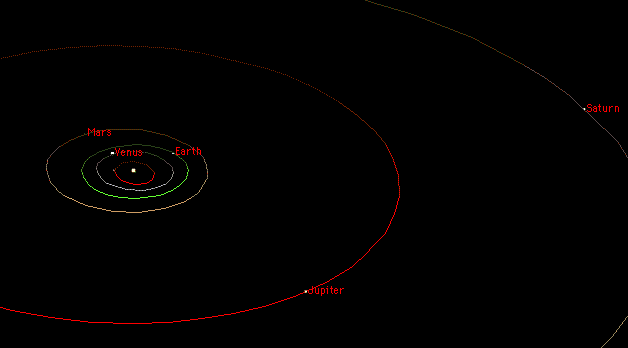
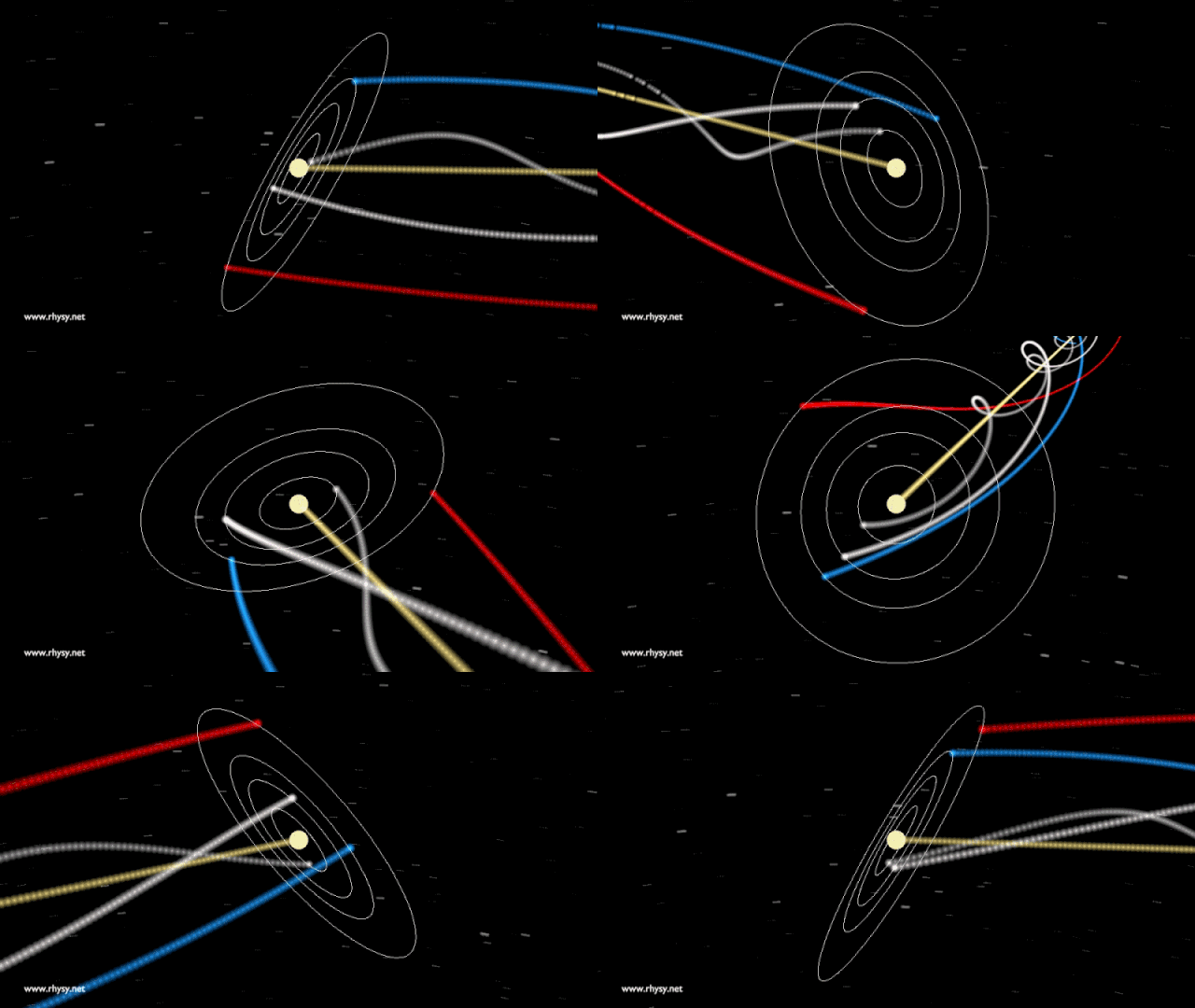
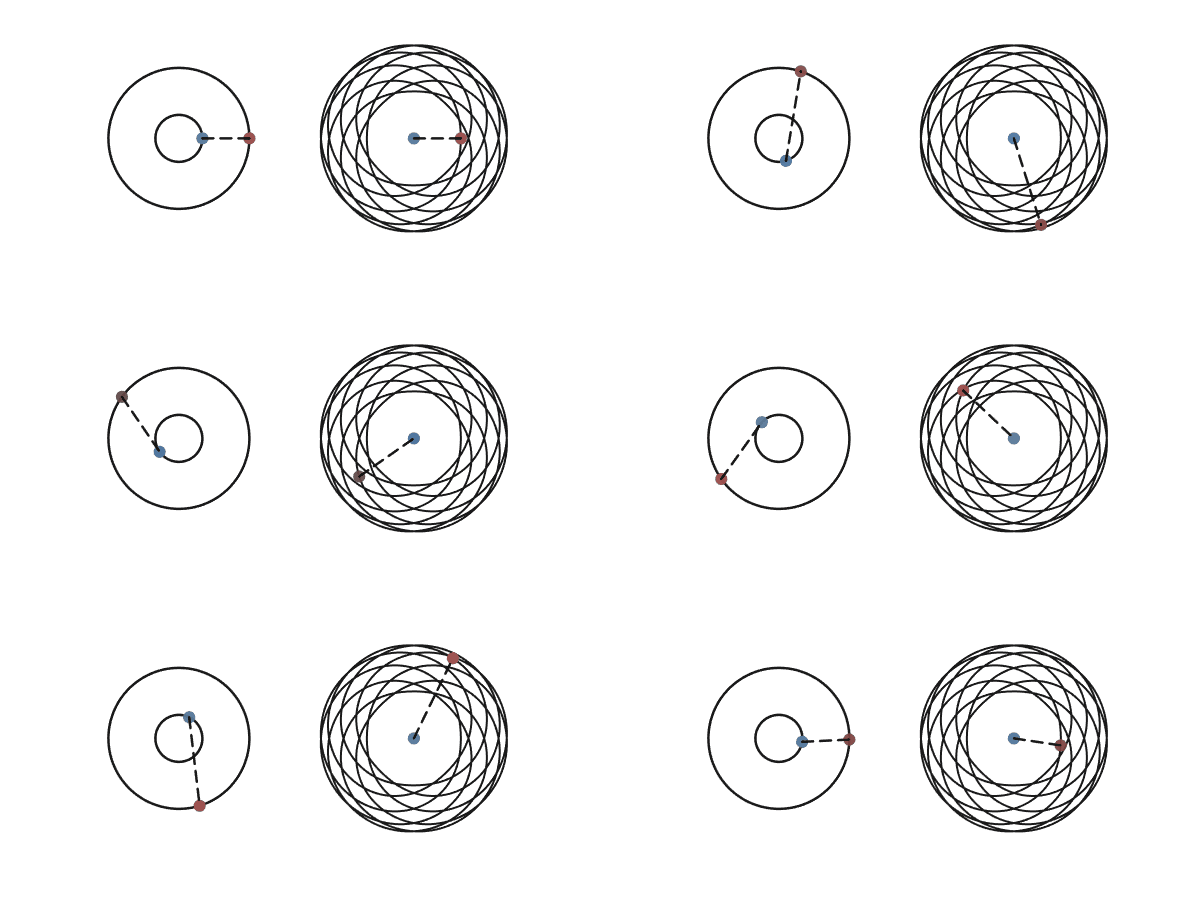
Another interesting example to consider is geocentrism vs. heliocentrism and planetary orbits. Ptolemaic geocentrism with its “epicycles” is not totally incorrect, as this is indeed what planetary orbits look like if we use the earth as our frame of reference. Planetary orbits only look like ellipses if we use the sun as our frame of reference. If we instead used the center of the milky way galaxy as our frame of reference, then planetary orbits would appear more helical in shape.
So then, how is structural realism different from an antirealist view like instrumentalism? Structural realism and instrumentalism are similar, however the latter states that we should focus on results and not on how we get those results. A hypothetical example might be helpful. Suppose we have a category of phenomena that can be explained and predicted equally well by theory A and theory B, but A and B differ in their mathematics: the math lines up only for the phenomena we know about and are interested in describing. Theory A uses math that is highly contrived and convoluted, while theory B uses math that is elegant and simple. Now, both structural realism and instrumentalism would say theory B is superior, but for different reasons. According to structural realism, we prefer math that is simple and not ad hoc because it is more likely to be truthy. If a paradigm shift does occur, the new mathematical model is likely to be similar. According to instrumentalism, we prefer math that is simple and not ad hoc because it is easier to do computations with and is more likely to be easily generalizable to new phenomena we weren’t aware of.
Note that scientists will do what they will, regardless of philosophy of science. While philosophy of science does have the potential to guide scientific practice in some ways, it is primarily concerned with answering meta-scientific questions about the nature of evidence, explanation, prediction, theory, falsification, and so on. These are questions about science that are not scientific questions. The aim of philosophy of science, in general, is to understand science, not to create normative rules for scientists to follow. The realism debate is potentially relevant for how scientists formulate and evaluate theories, but more to the extent that an individual scientist’s personal view might influence the way they think rather than being able to derive practical guidelines from any particular philosophical position.
 thoughts on mind