
Ludology and narratology are the two sides of the coin that is the study of games (in the non-mathematical sense). Ludology is the study of game mechanics and rules, and narratology is the study of story and setting. Ludology is closer to math, while narratology is closer to literary analysis. Narratology of games is particularly concerned with the ways in which interactive narrative medium differs from traditional narrative media like books and film. Historically, there has been conflict within the field of game analysis about whether ludology or narratology should take priority.
There is a link between these two features of gameplay due to some of the fundamental purposes of play. One proposed reason for play in general is to prepare for possible future challenges and practice skills by simulating them in a safe environment. This phenomenon is not limited to humans, as this is also one of the primary purposes of animal play. Another central purpose is social bonding.

Homo sapiens‘ specialization as a species is having a brain that can adapt behavior to different environments. Instead of play-practicing specific instinctual behaviors, human play typically replicates behavior we observe. Small children are known for imitating their parents, characters on TV, and so on, possibly driven evolutionarily by the fact that observed behavior of adults is likely to be adaptive in the present environment (whatever that might be). According to psychologist Angeline Lillard, play is thought to have evolved independently in several species and may serve different purposes for different species. In humans, the function of playing pretend is not totally known and thought to be complex. Lillard points out that playing pretend requires inhibition (like restraining oneself from actually eating pretend food) and thus may be part of developing emotional self-regulation. A critically significant feature of pretend play is the awareness of the pretense and suspending disbelief for the purpose of play. (Lillard 2017.)
Free play during early childhood often has only loose “rules” and “narrative.” However, these are still crucial to the process of play. Rules determine how resources can be used (like toys) and what actions are acceptable or unacceptable. If you have ever played with a small child, you may have been told at times that you were playing wrong. For example:
Adult: “I’m driving the car down this road.”
Child: “No, the car doesn’t go there!”
In the context of play, I’m using the term narrative very generally to refer to the counterfactual or imaginary world of the game. When we pretend that toy cars are real cars, we are creating a narrative. Of course, this does not necessarily have any coherent narrative structure in the traditional sense. Importantly, however, there are still characters with goals and conflicts that must be overcome. This can be quite simple. I might play as a pretend version of myself, imagining myself in the game world. Alternatively, cars themselves might be anthropomorphized characters. There must be some sort of goal to accomplish, such as wanting to be somewhere, and some sort of conflict or obstacle, such as the destination being some distance away. In this example the character can overcome the obstacle by actively traveling towards the destination. That’s not much of a conflict, but it illustrates the idea. A narrative has a character that is capable of action with a goal and something between the character and their goal that necessitates some kind of action. The action is the observable behavior of playing the game (like moving the toy car down the road). The rules specify how a goal can be accomplished.
Narrative is unique to humans as far as we know, and is also essential to our wellbeing and survival. It is easy to imagine prehistoric humans sitting around a fire telling stories and how beneficial that sharing of information would be. Hunting stories, for example, may be used to teach lessons about hunting. From very early on in history, however, narrative oral traditions of humans concerned more abstract ideas such as leadership, humility, friendship, and death. This is the origin and significance of epic poetry and myth, about which much has been written.
Note that children’s pretend play can be individual or in a group, and the group may consist of peers of the same age or people of different ages. In individual play, the pretend world can have a kind of dreamlike flexibility. Setting, characters, goals, or what specific objects represent may change seamlessly as play goes on. In group play, the pretend world must be co-constructed, and so it requires communication and negotiation.
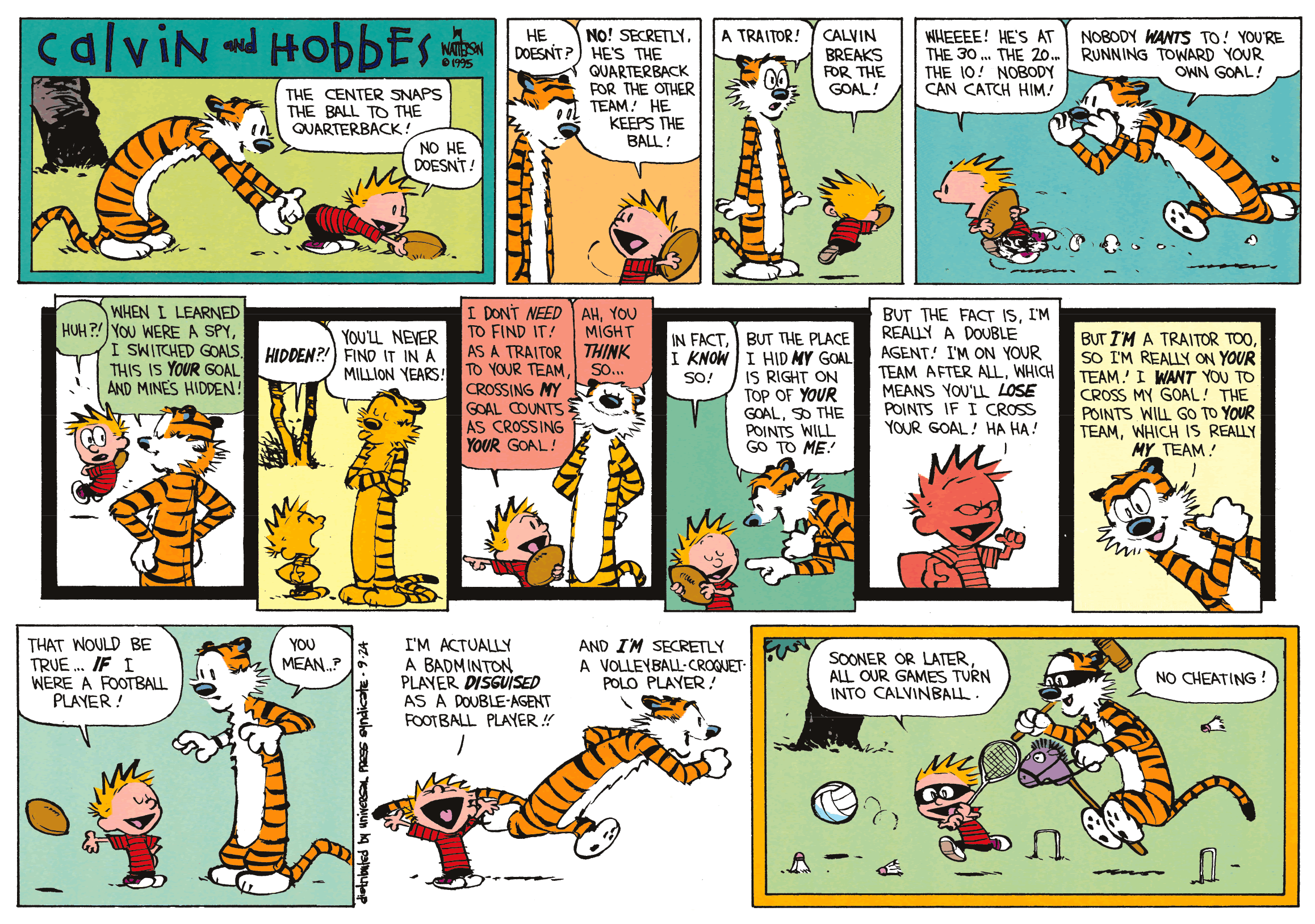
As children get older, and especially in the context of group play, games typically become more structured. Rules are explicit rather than implicit, and narrative concepts are agreed upon beforehand. There are also more likely to be win and lose conditions. This includes games like rock-paper-scissors, tag, board games, card games, and sports. In some cases, like sports (which will not be a focus here), narrative might be unclear. This is one of multiple areas where these concepts start to get fuzzy. Bernard Suits, a philosopher of games and gaming, distinguishes between sport, game, and play. While he characterizes sports and games as being very similar concepts, they may or may not have a play component. In particular, Suits states that professional athletes are not engaging in “play” when they are playing their sport. Suits and others make a point to distinguish play from work. Professional sports evolved from amateur sports, which in turn evolved from informal games. The point at which something stops being “play” is unclear (whether for an individual or historically). Additionally, there are board games, card games, and video games that are mechanics-focused and have no narrative content to speak of. Under my interpretation I associate “narrative” with the goals and conflicts present in the game. The reason is because these involve conceits to the game world. Consider a multiplayer card game in which the objective is to get rid of all of your cards. The goal is something that the player has no reason to pursue independent of the game, and the adversarial relationship with the other players is the same way. Opponents in a game are pretend enemies, not actual enemies, and our desire to defeat them is only in relation to the co-constructed game world. This is, of course, making some assumptions about “ordinary” gameplay. There could be exceptions. (Suits 1988.)
Gameplay and narrative: Tetris
The game Tetris is an example of a game with highly abstract gameplay and no narrative plot. The narrative features here come from how the player “reads” the game. The output of the game presented to the player is a series of images of colored shapes; “movement” is the intended interpretation, or even “falling under the force of gravity.” The player has the goal of eliminating lines and preventing the blocks from reaching the top of the screen.
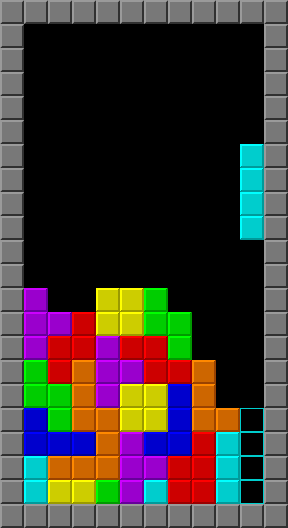
In an abstract game like Tetris, the player’s imagination may fill in the blanks to form a more complete narrative. Hank Green, long before his fame as a science communicator on the internet, identified Tetris as an adversarial interaction between a protagonist (the player) and an antagonist (whoever is responsible for the blocks that fall down the screen).
There’ve been a lot of bad guys
in a lot of good video games
Bowser and your opponent in Pong
the Pacman ghosts and Donkey KongBut one bad guy stands alone
he will never tire
he sits there on his blocky throne
he’ll be there ’till you dieYour fingers may move with blinding speed
The Man Who Throws the Tetris Piece by Hank Green (2007)
there may be no game you can’t beat
but can’t you see that no one can defeat
the man who throws the Tetris piece
Reddit user Omio9999 interprets the game differently. For context, in the original Game Boy version of Tetris (one of the most popular editions of the game) an animation of a rocket launch will play if the player reaches 100,000 points. For every additional 100,000 points, the rocket gets bigger, eventually becoming a Soviet space shuttle.
Have you ever noticed the ending, where rockets are sent skyward? That’s a hint that we’re working with the space race, and at the time Tetris was originally developed, the space race was a VERY prevalent matter. But, there’s more. When your score improves, the rocket that’s sent improves with it. That can’t be a coincidence, can it? Well, no, not really, when you consider this.
Rocket fuel is composed of a compound, and an oxidant. A compound is two things mixed together. So, how does that knowledge tie in?
Notice the colour patterns of the blocks. You’ll notice three colours. Two to make the compound, and one as the oxidant.
So, from this, we can theorize that you are in a lab constructing the “perfect” rocket fuel solution. Every line cleared is added to a reservoir elsewhere for safety. However, your lab is always in risk of a containment breach, represented by topping out. When you top out, your lab is shut down, unable to resume. The mess is so great that you are unable to continue your work. At least, however, you are able to see the rocket that you constructed the fuel for take off.
Omio9999, [Tetris] Tetris has a PLOT?! in r/GameTheorists (2016)
These are sometimes referred to as “fan theories” or “head canon.” Many games like Tetris have so little plot as to appear cryptic or totally abstract.
Early video games’ plot limitations and later innovations
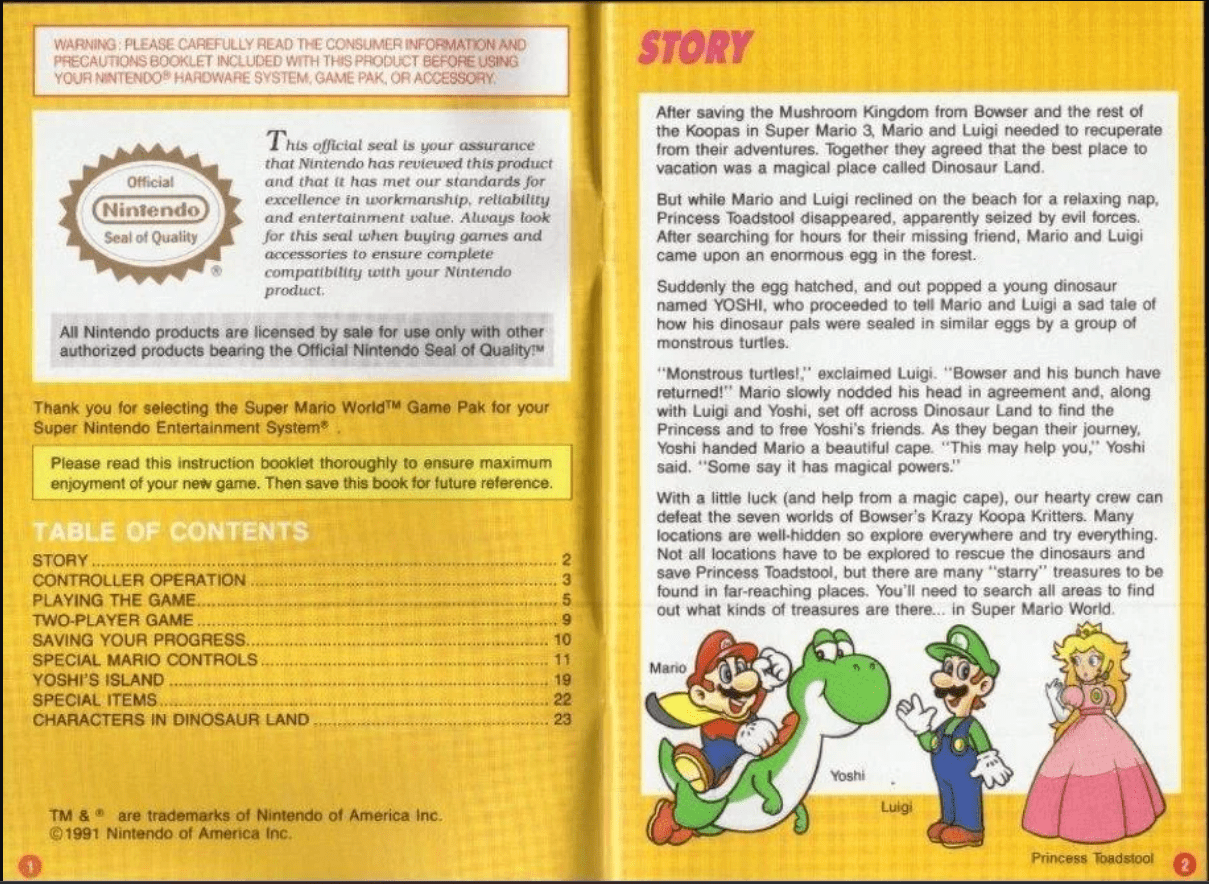
Cryptic gameplay has not always been the result of the developer’s narrative intent. Historically, video games faced severe memory limitations. As a result, a common practice for many games was including textual narrative information in the game manual instead of in the game itself.
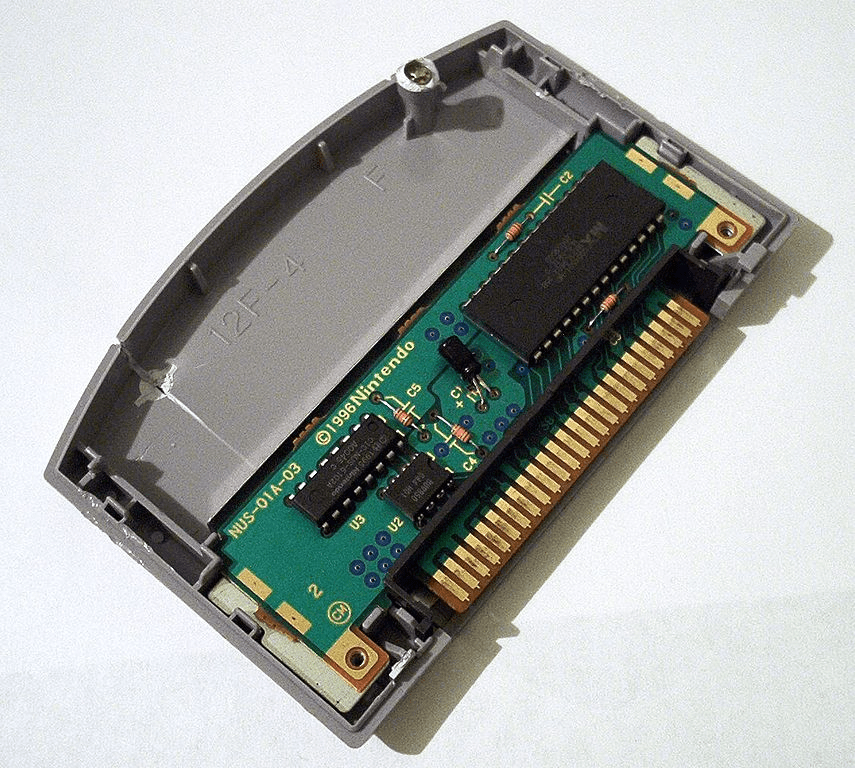
At the same time, other physical media provided opportunities for greater narrative information but less interactivity. Specifically, the rise of optical disc technology in the 1980s and 1990s led to a proliferation of “full motion video” (FMV) games. More traditional games during this time used read-only memory (ROM) cartridges, which allow a program to be executed in place without being loaded into a computer’s RAM first. Cartridges offer excellent speed but very limited storage space. Optical discs, on the other hand, provide a large amount of storage space but are slow to access and load data. Data on a disc must be located, read with a laser and sensor, and loaded into RAM in a usable form.

Early FMV games were typically point-and-click, more “choose your own adventure film” than video game. Prerendered cutscenes continue to be used in modern games to augment storytelling during gameplay. With technological advancement, by the late 90s it also became practical to incorporate “in-engine” cutscenes rendered in real time.
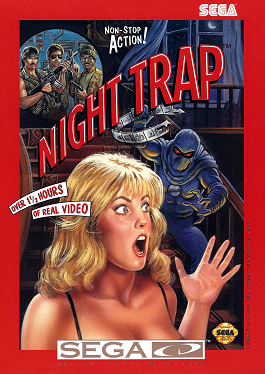
Both solutions– presenting plot in text or presenting plot in video –tend to tell rather than show. It is generally regarded as superior game design to incorporate plot directly into the interactive elements of the game. The gold standard, according to many, is atmospheric storytelling, pioneered and popularized by game like Valve’s 1998 first-person shooter Half-Life. That is perhaps a story for a future post, however.
Board games and narrative: Monopoly
Let’s consider the game Monopoly. It is a zero-sum competitive multiplayer board game with a random chance component (rolling dice to move and getting random cards from the Community Chest and Chance spaces), some individual decision making (when and where to buy, develop, or mortgage properties), and some negotiation between players (trading properties). The objective of the game is to acquire as much wealth as possible and bankrupt the other players.
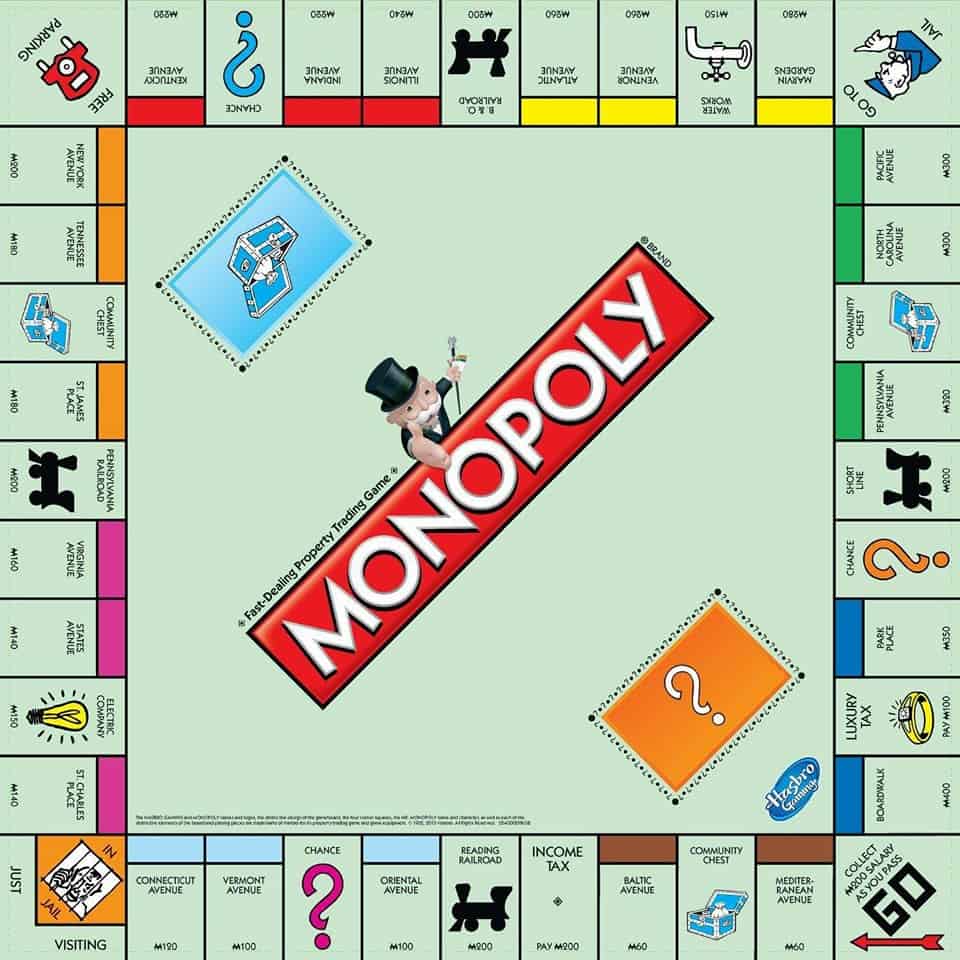
Monopoly is an early modern game, with its first prototype patented in 1904 by Lizzie Magie. Magie’s original name for the game was The Landlord’s Game. A later version of the game, renamed Monopoly, eventually came into the hands of Charles Darrow, who sold it to Parker Brothers and was credited with its invention. Hasbro acquired Parker Brothers in the 90s and continue to credit Darrow and not Magie. (Forsyth 2023.)
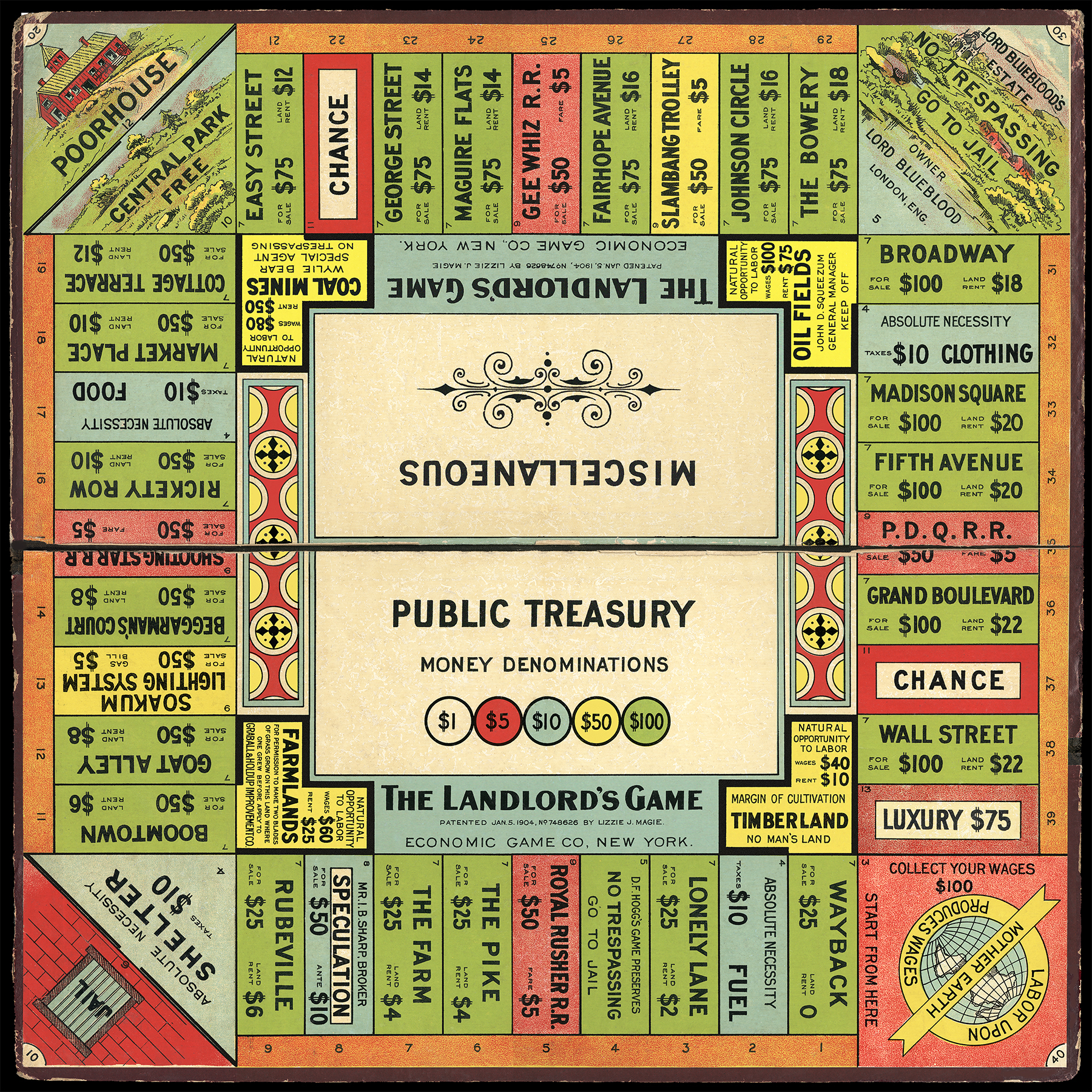
Note that while the game mechanics are described in terms of the game’s setting (properties, money, etc.), they are independent of the setting. In other words, a game could have exactly the same mechanics while contextualizing them differently. Monopoly is a particularly prolific example of how easily a game’s setting can be changed while leaving the rules mostly the same. The various editions of Monopoly include (among many others):
- 25th Anniversary Edition
- 30th Anniversary Edition
- 40th Anniversary Edition
- 50th Anniversary Edition
- 60th Anniversary Edition
- 65th Anniversary Edition
- 70th Anniversary Edition
- 80th Anniversary Edition
- 85th Anniversary Edition
- 2006 FIFA World Cup Germany Edition
- 2010 FIFA World Cup South Africa Edition
- 2014 FIFA World Cup Brazil Edition
- 2018 FIFA World Cup Russia Edition
- A Christmas Story Edition
- America Edition
- American Chopper Edition
- Animal Crossing Edition
- Aspen Colorado Edition
- Astronomy Edition
- Avatar Edition
- Avengers Edition
- Bacon-Opoly
- Bass Fishing Lakes Edition
- Beagle-Opoly
- Beetlejuice Edition
- BibleOpoly
- Black Panther Edition
- Bob Ross Edition
- Boooo-Opoly
- Brew-Opoly
- Brooklyn Edition
- Call of Duty Black Ops Edition
- Canada Edition
- Casinopoly
- Chocolate-Opoly
- Christchurch Edition
- Christmas Edition
- Coca-Cola Edition
- Cocktail-Opoly
- Corvette Edition
- Cthulhu Edition
- Despicable Me Edition
- Disney Animation Edition
- Disney Theme Park Edition
- Disney Villains Edition
- Doctor Who Edition
- Edinburgh Zoo Edition
- Elvis Edition
- Fallout Edition
- Farm-Opoly
- Ford Edition
- Fortnite Edition
- Friends Edition
- Frozen 2 Edition
- Futurama Edition
- Game of Thrones Edition
- Garden-Opoly
- Ghostbusters Edition
- GI Joe Edition
- Godzilla Edition
- Grateful Dead-Opoly
- Hallmark Channel Holiday Edition
- Harley Davidson Edition
- Horse Edition
- Jeff Foxworthy Edition
- Jerusalem Edition
- Jurassic World Edition
- Lilo & Stitch Edition
- London Underground Edition
- Looney Tunes Edition
- Lord of the Rings Edition
- Lunar New Year Edition
- M&M’s Edition
- Maine Edition
- Mario Kart Edition
- Marvel Comics Edition
- Metallica Edition
- Mustang Edition
- My Hero Academia Edition
- Napa Valley Edition
- National Parks Edition
- Night Sky Edition
- Nintendo Edition
- Ocean-Opoly
- Photo-Opoly
- Pirate-Opoly
- Pixar Edition
- Pizza Edition
- Planet Earth Edition
- Pokemon Johto Edition
- Pokemon Kanto Edition
- Queen Edition
- Rick and Morty Edition
- Roblox Edition
- Sacramento Edition
- Schitt’s Creek Edition
- Scottsdale Edition
- Seaworld Edition
- Seinfeld Edition
- Sexopoly
- Shark Week Edition
- South Park Edition
- Space Edition
- Space Jam: A New Legacy Edition
- Star Trek Edition
- Star Wars Edition
- Stranger Things Edition
- Street Fighter Edition
- Super Mario Bros Edition
- Swansea Edition
- Target Edition
- Teenage Mutant Ninja Turtles Edition
- The Godfather Edition
- The Golden Girls Edition
- The Legend of Zelda Edition
- The Lion King Edition
- The Nightmare Before Christmas Edition
- The Office Edition
- The Simpsons Edition
- Toy Story Edition
- Transformers Edition
- U.S. Space Program Edition
- U.S. Stamps Edition
- Union Pacific-Opoly
- Volkswagen Edition
- Wild Animalopoly
- Wine-Opoly
- World of Warcraft Edition
- World War II Edition
- Yu-Gi-Oh Edition
- Zelda Edition
- Zombie-Opoly
(Monopoly Fandom 2023; UltraBoardGames 2020.)
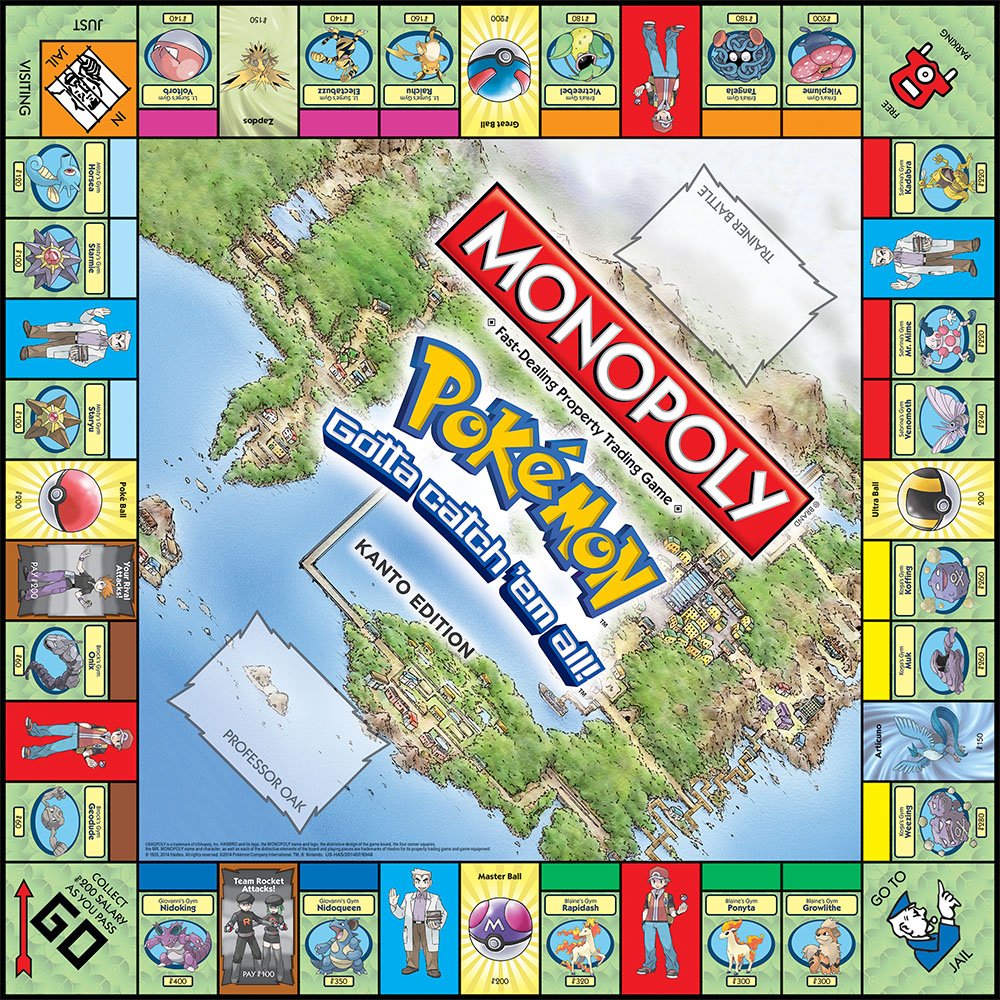
Many of the editions listed above do in fact modify the rules to varying degrees, but the point remains that there is nothing essential about the connection between most of the specific ludic and narrative properties of the game. Below is an example of a more abstract description of the board mechanics:


That being said, Monopoly is an example of a game in which the mechanics were motivated directly by its narrative framing, not just to create fun gameplay. Magie, the game’s original inventor, was involved in the leftwing political movement of the turn of the 20th century. She designed the game to be instructive regarding the roles and motives of landlords, i.e., monopolizing property (Forsyth 2023). Even without an essential connection between ludic and narrative features, some mechanics do seem to have natural interpretations. We see in the Pokémon Kanto Edition that “jail” is still “jail” and “money” is still “money” (though it is Pokémon money instead of Monopoly money). It is common in games for ludic and narrative features to be developed in tandem, with some game mechanics being introduced for purely narrative purposes and some story elements being inserted solely to justify certain gameplay features. It varies greatly between games how well the story and gameplay work together to create a cohesive experience. In future posts we will explore this in more detail.
References
Angeline S. Lillard (2017) Why Do the Children (Pretend) Play? Trends in Cognitive Sciences, Vol. 21, No. 11, pp. 826-834.
Bernard Suits (1988) Tricky Triad: Games, Play, and Sport. Journal of the Philosophy of Sport, Vol. 15, No. 1, pp. 1-9.
Forsyth, T. (2023). The Landlord’s Game. landlords-game.com.
Green, H. (2007). The Man Who Throws the Tetris Piece. https://www.youtube.com/watch?v=ApbvchiEdTY
Monopoly Fandom (2023). List of Monopoly Games (Board). https://monopoly.fandom.com/wiki/List_of_Monopoly_Games_(Board).
Omio9999 (2016). [Tetris] Tetris has a PLOT?! https://www.reddit.com/r/GameTheorists/comments/47gjp5/tetris_tetris_has_a_plot/
UltraBoardGames (2020). List Different Editions of Monopoly. https://www.ultraboardgames.com/monopoly/editions.php.
 thoughts on mind