
A few weeks ago (late summer 2023), YouTuber Owen Morgan published a video about Sherri Tenpenny, a former doctor whose testimony before the Ohio legislature about COVID-19 vaccines went viral in 2021. Notably, Tenpenny has claimed that the vaccine was making people magnetic, that this had something to do with 5G wireless communication, and also that people who received the vaccine were going to develop AIDS. At the time, Tenpenny was a Doctor of Osteopathic Medicine (DO), a qualification similar to MD, but she has since lost her license to practice medicine.
Osteopathy is an odd animal. Many people either know nothing about it or have strong opinions about it, it seems. It is considered a field of alternative medicine, which gives it some unfortunate bedfellows. However, osteopathy is generally regarded within the medical community as a legitimate alternative, one that does not directly contradict the science behind mainstream medicine. DOs are, nowadays, able to (and do) work alongside MDs in a wide variety of specializations, but this is predicated on the fact that accredited schools of osteopathy teach the essentials required of an MD plus osteopathic medicine.
Osteopathic medicine
Osteopathic medicine is practiced by Doctors of Osteopathic Medicine, or DOs, who bring a whole-person approach to care by focusing on looking beyond your symptoms to understand how lifestyle and environmental factors impact your wellbeing.
American Osteopathic Association
The largest specialization by far among DOs is family medicine and primary care. DOs distinguish themselves from MDs with a more holistic view of the patient as a person and a greater focus on preventative care. They also put greater emphasis on bedside manner and positive doctor-patient relationships. These things have clear benefits, but there is still skepticism of osteopathy for a few particular reasons.
Osteopathy was founded by Andrew Taylor Still, an American physician, in the late 1800s. In order to understand osteopathy, it’s important to understand the context in which it developed. The 19th century bridged the pre-scientific and pre-industrial with the modern. In the United States, it was a period of growth and national identity formation. Many distinctly American phenomena, such as Mormonism and Seventh Day Adventism, Manifest Destiny, the Standard Oil Company, Edison’s lightbulb, the Civil War, the Trail of Tears, etc. occurred or arose in this century.
Through the Industrial Revolution(s), science and engineering came to be seen as the way of the future. However, modern science did not yet exist, leading to a diversity of creative theories and inventions with little effectiveness and sometimes great harm. This was the case in medicine, which was coming out of humor and miasma theory but had not yet established germ theory (which was proved correct by the late 19th century). In a sense, the problem was that our power to develop treatments for diseases surpassed our ability to understand which treatments were effective.
This was a problem Still recognized having witnessed (and been part of) the state of surgery during the Civil War and having seen his wife and children die of meningitis despite receiving medical treatment. He was concerned that mainstream drugs and medical treatment were ineffective and often dangerous, which he was right about. Common drugs of the time, for example, included compounds containing mercury and other toxic elements, and surgery lacked modern antiseptic practices (not to mention modern anesthetics). Still had a goal of developing a theory of medicine that avoided drugs and surgery wherever possible. In the context of the times, this was an extremely wise goal.
The theory he developed, namely osteopathy, was unfortunately not accurate. Still thought that disease was caused by structural problems in the body, much like his contemporary Daniel David Palmer who developed chiropractic. Though founded on similar principles, osteopathy and chiropractic diverged from each other as they developed, with osteopathy becoming more generalized while chiropractic continued to focus on using manual spine adjustment as a cure-all.
Osteopathy, too, has a technique of manual adjustment to fix structural problems, but because of Still’s underlying philosophy of gentleness and non-invasiveness, it does not carry the risk of injury that chiropractic does. At worst it does nothing, which is in fact what it appears to do. Still’s theories have never been corroborated by science. Although Still studied human anatomy and physiology, many biological mechanisms within the body were simply not understood by anyone yet. Beyond not yet having arrived at the modern scientific understanding, both Still and Palmer believed in spiritism, a somewhat trendy belief at the time, which posited the existence of a “spirit world” with which it is possible to communicate through seances and so on. The existence of such spirits has never been demonstrated, and by now (in 2023) it has been very firmly established that these types of claims of the “paranormal” are fabrications or misperceptions. Any medical theory that involves spirits in any way is therefore now considered pseudoscience, and references to spirits have been largely downplayed by modern practitioners. (See Senzon, S. A. (2011). Constructing a philosophy of chiropractic: evolving worldviews and modern foundation. J Chiropr Humanit, 18(1), 24-38.)
Still, Palmer, and many of their students and associates were partly inspired by phrenology, an earlier pseudoscience that proposed that personality, intelligence, etc. could be determined through examination of skull shape. Even for those who did not subscribe to phrenology’s specific system, the idea that skull shape is important was compelling.
William Garner Sutherland, DO (1873-1954), discovered, developed and taught Cranial Osteopathy in the early to mid-1900s. Dr. Sutherland referred to his discovery as “Osteopathy in the Cranial Field” (OCF). He never failed to emphasize that the Cranial Concept was only an extension of, not separate from, Dr. Still’s science of osteopathy. Dr. Sutherland was the first to perceive a subtle palpable movement within the bones of the cranium. He went on to discover the continuity of this rhythmic fluid movement throughout all tissues of the body. While a student at the American School of Osteopathy in 1899, Dr. Sutherland pondered the fine details of a separated or “disarticulated” skull. He wondered about the function of this complex architecture. Dr. Still taught that every structure exists because it performs a particular function. While looking at a temporal bone, a flash of inspiration struck Dr. Sutherland: “Beveled like the gills of a fish, indicating respiratory motion for an articular mechanism.”
Anatomy textbooks stated that the cranial sutures were fused and unable to move in adulthood. Dr. Sutherland thought his inspiration to be absurd and resisted the notion that the skull bones could move. This idea consumed him and became the motivation for his singular, detailed and prolonged study of skulls, and experimentation upon his own head. Over many years of intense study, Dr. Sutherland came to discover a previously unrecognized phenomenon. The anatomy had been described by others, but it took the unique genius of Dr. Sutherland to put it all together. He named his discovery “The Primary Respiratory Mechanism” and recognized this phenomenon as life’s purest and most vital expression. As data is gathered throughout the medical and scientific disciplines, the fundamental genius of Dr. Sutherland’s observations becomes ever more validated. In time, this Cranial Concept may become regarded as one of the most important discoveries in human physiology.
The Cranial Academy (archived)
Suffice it to say that Sutherland was incorrect. The bones of an adult’s cranium are indeed fused and cannot move. No evidence for the “primary respiratory system” has ever been found. (See Harriet Hall, MD (2008), Wired to the Kitchen Sink: Studying Weird Claims for Fun and Profit.)
Osteopathy, chiropractic, phrenology, and so on represent 19th and early 20th-century people’s best attempts to understand human physiology and illness. Without the capabilities of modern science, it was difficult to establish the efficacy or non-efficacy of any particular practice. This led to a general pluralism of medical approaches. As science advanced and more evidence became available, approaches not supported by evidence took a few different paths. Some, like phrenology, were abandoned altogether. Others, like chiropractic, maintained a following despite a lack of evidence and developed in parallel with mainstream (allopathic) medicine. Osteopathy, however, has developed alongside mainstream medicine, in the sense that a breakthrough in mainstream medicine is a breakthrough in osteopathic medicine. Meanwhile, Still and his followers’ original theories of manual adjustment have remained, whereas they have been disregarded by the mainstream. The extent to which a given DO subscribes to or practices these treatment techniques varies widely.
Structural, anatomic assessment is obviously important for detecting a wide array of newborn problems and is, of course, performed every time an infant is examined. But the osteopathic evaluations described above purport to detect subtle findings reflecting complex, systemic, physiologic processes. They claim to detect vague alterations of texture, tone, and alignment indicative of the overall physiologic state of these premature infants – a tidy package of physiologic dysfunction that is somehow contributing to their need to remain hospitalized. As with other forms of [complementary and alternative medicine], there is a drastic oversimplification at play here, of phenomena that are very complex. To claim that a premature infant’s hospital stay may be prolonged by physiological “imbalances” that can be predictably detected by an osteopath’s trained, hands-on assessment, and which can then be treated with simple manipulations, is not just fantastical and wishful thinking, it is a massive simplification of a very complex physiological reality. A reality over which no “traditional” practitioner would ever claim such mastery and control.
John Snyder (2014), Osteopathy in the NICU: False Claims and False Dichotomies
Diagnoses based on this mechanism feature not just low reliability but no reliability. There is no evidence, whatsoever, that different practitioners perceive similar phenomena or even that perceived phenomena are real.
Hartman, S.E. (2006). Cranial osteopathy: its fate seems clear. Chiropr Man Therap 14, 10. https://doi.org/10.1186/1746-1340-14-10
This has created a so-called paradox for osteopathy. Things like a philosophy that emphasizes bedside manner could be (and are in some cases) incorporated into mainstream medicine. Those things in osteopathic medicine that could not be incorporated into mainstream medicine, i.e., that which makes the two truly distinct, are precisely those parts of osteopathy that are pseudoscience. Osteopathic medicine wants to be taken as seriously as mainstream medicine, but it can only be taken seriously insofar as it is mainstream medicine.
The paradox is this: if osteopathy has become the functional equivalent of allopathy, what is the justification for its continued existence? And if there is value in therapy that is uniquely osteopathic — that is, based on osteopathic manipulation or other techniques — why should its use be limited to osteopaths?
Howell, J. D. (1999). The Paradox of Osteopathy. New England Journal of Medicine, 341(19), 1465–1468.
… osteopathic medical students faced a dilemma concerning their identity. On the one hand, they wished to be considered complete medical practitioners. On the other hand, they wished to be seen as different from MDs.
Eckberg, D. L. (1987). The dilemma of osteopathic physicians and the rationalization of medical practice. Soc Sci Med, 25(10), 1111-1120.
This is not a criticism of DOs or osteopathic medical schools as they exist. Steve E. Hartman, cited above being about as critical as it is possible to be of osteopathic manipulation, has taught at a school of osteopathic medicine for decades. The practical reality is that there is a difference between a typical DO’s approach and a typical MD’s approach and both are valid, separate from whether the DO uses manual adjustment techniques. Manual adjustment is also usually not dangerous, since it does not replace necessary allopathic treatment and is physically gentle. It may be no more effective than a placebo, however placebos can be effective (the entire reason for testing treatments against a placebo). For a particular patient and situation, either a DO’s approach or an MD’s approach may be more helpful than the other. DOs are known for being highly competent family physicians and primary care providers. (See Davis, G.E. et al. (2023). Assessing patient experience of the tenets of osteopathic medicine. J Osteopath Med., 123(8), 371-378.)
Instead, the issue is with osteopathic medicine as a field maintaining pseudoscientific beliefs and practices. In some cases this could be purely to justify osteopathy existing separately from allopathy.
As best I can determine from my colleagues, learning osteopathic manipulation (OM) is the price they pay to obtain an otherwise standard medical education.
Mark Crislip (2013), Pump it up: osteopathic manipulation and influenza
Eighty-eight percent of the respondents had a self-identification as osteopathic physicians, but less than half felt their patients identified them as such. When responses are considered in the context of all survey respondents (versus only those who provided open-ended responses) not a single philosophic concept or resultant practice behavior had concurrence from more than a third of the respondents as distinguishing osteopathic from allopathic medicine. Rank and file osteopathic practitioners seem to be struggling for a legitimate professional identification.
Johnson, S. M. and M. E. Kurtz (2002). Perceptions of philosophic and practice differences between US osteopathic physicians and their allopathic counterparts. Soc Sci Med., 55(12), 2141-2148.
Pseudoscience, conspiratorial thinking, and misinformation
To reiterate, not all DOs subscribe to Still’s or Sutherland’s theories or use their techniques, and very few use these techniques with regularity. Among those who do, there are undoubtedly those who treat it with healthy skepticism. Even for bona fide true believers, the vast majority of what they study in osteopathic medical schools is mainstream science and medicine. That being said, an individual who already believes in pseudoscience and wants to became a doctor is probably more likely to pursue a DO than an MD. Even MDs have their fair share of quacks though, and there were MDs who came out with antivax conspiracy theories during the pandemic. This may have an effect of eroding the public’s trust in medicine in general, however because MDs are mainstream and numerous, the actions of a few are rarely seen as representing the field as a whole. Osteopathy is a smaller field by far and people know less about it, so when DOs come out against vaccines, it may have a more serious impact on public perception.
Enter Sherri Tenpenny.
Sherri J. Tenpenny, D.O., graduated from the Kirksville College of Osteopathic Medicine in 1984. After completing a rotating internship at Michigan Osteopathic Medical Center, Dr. Tenpenny began working at Blanchard Valley Regional Health Center in Findlay, Ohio in 1986. She remained at Blanchard until 1998 and held several positions over the years including Chief of Family Practice/Emergency Medicine and Director of the Emergency Medicine Department. … In addition to her medical practice, Dr. Tenpenny has authored multiple books, columns, and articles, appeared on local, national, and international television networks, participated in various documentaries and DVD productions, and been interviewed on a myriad of radio programs.
State Medical Board of Ohio, Case No. 22-CRF-0168
Despite her apparently respectable career in mainstream healthcare, Tenpenny was an antivaxxer for years before COVID-19. In the 2000s, she published anti-vaccine books, and in the 2010s, she garnered media attention when her anti-vaccine lecture in Australia was canceled by the venue following public pushback. She has repeatedly spread the lie that vaccines cause autism. I call this a lie not because Tenpenny was lying, but rather because it was originally fabricated by disgraced former doctor Andrew Wakefield. Wakefield’s now-retracted paper suggesting the MMR vaccine caused autism was discovered to be fraudulent (not merely incorrect), and was an effort to convince the public to receive separate mumps, measles, and rubella vaccines rather than the combined MMR. Ironically, Wakefield supported vaccines in general, but the panic he intended to cause regarding MMR spiraled quickly out of his control and turned into a completely anti-vaccine movement. Within this group, people became convinced that all vaccines cause autism, despite the fact that Wakefield’s paper was the only indication vaccines could cause autism, the paper did not claim vaccines in general could cause autism, and the paper was found to be fraudulent without a shadow of a doubt. It goes almost without saying that subsequent attempts to study a potential connection between vaccines and autism show no connection. For a more detailed breakdown of that story, I recommend YouTuber Hbomberguy’s excellent video on the topic.
Getting back to Tenpenny, she like many other antivaxxers engaged in even more extreme conspiracy theories when COVID-19 began spreading. The vaccine, of course, became a primary concern, however the threat was no longer simply autism (a condition that, at the very least, does exist in reality). This is when things went off the rails for Tenpenny and many others– from mere science denial to outright reality denial.
The Interrogatories also asked Dr. Tenpenny what scientific evidence she had, and specifically asked that she cite her sources for this evidence, regarding COVID-19 vaccines causing people to become magnetized or creating an interface with 5G towers; regarding the COVID-19 vaccine not injecting a real virus but strips of genetic material and patients suffering complications such as abnormal bleedings, myocarditis, strokes, and neurological complications; and regarding some major metropolitan areas liquifying dead bodies and pouring them into the water supply.
State Medical Board of Ohio, Case No. 22-CRF-0168
Ultimately, Tenpenny had her license suspended indefinitely for refusing to cooperate with the Ohio medical board’s investigation into the hundreds of complaints that had been submitted to them by the public. Tenpenny and her attorney argued that the investigation was politically targeted, but in fact the board is legally obligated to investigate complaints from the public.
Tenpenny’s conspiracy theories didn’t stop there, however, and she has apparently thrown her lot in with the general conspiracy theory community. Her propaganda website, the Tenpenny Report, has articles suggesting Maui was intentionally set on fire by globalists using space lasers to convince the public climate change exists, one saying 5G towers cause digestive problems, and a bizarre pseudohistorical theory about the global center of power moving west over time, among many others. I would like to point out in particular how racist and Eurocentric this last article is in its assessment of historical world powers. First of all, the idea of a single center of global power is absurd at any point in history, but more than that the article completely disregards the existence of all powerful empires in Asia, Africa, or pre-colonial America. It boggles the mind how one could ignore the majority of global geopolitical forces throughout history.
On Tenpenny’s private practice website there is a blog that also includes a large amount of misinformation and conspiracy theories, notably much of it written by MDs and NPs (nurse practitioners, who are usually in mainstream medicine). Aside from the usual COVID-19 and vaccine business, the blog also includes such classics as the demonization of soy. This is (usually) more misinformation than conspiracy theory, as I have only rarely seen assertions that soy is being pushed on us intentionally for nefarious purposes. Here’s the deal with soy: Michael Furci, NP, of Tenpenny Integrative Medical Center writes that “Soy isoflavones, contained in soy oil, are phyto-endocrine disrupters.” Let’s evaluate this claim in detail.
Soybean oil does indeed contain chemicals called isoflavones. Setting aside the fact that Furci misspelled disruptors, there is no such thing as phyto-endocrine disruptors (or disrupters). Furci is mixing up some terminology here. Soybean oil contains an isoflavone called phytoestrogen, or plant estrogen. Plant estrogens are a class of chemicals that either bear structural similarity to the human hormone estrogen or serve an analogous function in the plant’s physiology. Calling this a phyto-endocrine disruptor suggests that it disrupts the hormones of plants, when in fact it is a plant hormone. What Furci is attempting to imply is that phytoestrogen is a human endocrine disruptor. This is a common piece of misinformation. The evidence comes not from any empirical basis, but rather deduced from the assumption that phytoestrogen must act like estrogen in the human body. It does not, and those who claim it does do not know what any of these chemicals actually are. Many foods humans eat contain animal or plant hormones. This is a result of the fact that hormones are present and serve a purpose in the living body of a plant or animal. In general, consuming these hormones is perfectly healthy. Consuming a very large quantity of a specific plant or animal hormone could be disruptive, although probably not in precisely the ways Furci claims. It is never advisable to consume huge quantities of a single food, so occasionally avoiding soy to promote greater variety in one’s diet is perfectly reasonable. Avoiding soy altogether because of isoflavones is not reasonable. Hbomberguy also has an excellent video on this topic.
The Tenpenny Integrative Medical Center website also has a page about ultraviolet blood irradiation (UBI), a pseudoscientific treatment Trump mentioned and later said he was being sarcastic about. I thought at the time that Trump was confused by statements from scientists that sunlight kills SARS-Cov-2, but he may have (also) heard about UBI from one of his conspiracy theorist buddies.
Tenpenny’s influence should not be understated. She was personally commended by the State Surgeon General of Florida, Joseph Ladapo, for spreading antivax and COVID-19-related conspiracy theories. Ladapo is, at a high level, responsible for the health of over 20 million people. He advised Floridians not to get vaccinated against COVID-19 and published misleading statistics, leading to the FDA and CDC sending him a letter saying his statements were “incorrect, misleading and could be harmful to the American public.” I noticed in particular that the letter calls out his post hoc fallacy and his failure to account for other variables.
Joseph A. Ladapo, MD, PhD, is the State Surgeon General of Florida. He also serves as Professor of Medicine at the University of Florida, where his research examines behavioral economic strategies to reduce cardiovascular risk in low-income and disadvantaged populations. Clinically, he has cared primarily for hospitalized patients. His research program has been supported by the National Institutes of Health and Robert Wood Johnson Foundation, and includes clinical trials of interventions for weight loss, smoking cessation, and cardiovascular disease prevention among people with HIV. Dr. Ladapo’s studies have been published in leading medical journals, including The Journal of the American Medical Association, Journal of the American College of Cardiology, and Annals of Internal Medicine. His writings about health policy and public health have appeared in the Washington Post, Wall Street Journal, and USA Today. Prior to joining the faculty of University of Florida, he was a tenured Associate Professor at David Geffen School of Medicine at the University of California, Los Angeles (UCLA).
Florida Department of Health
How, one may ask, can a seemingly qualified doctor like Ladapo endorse the antivax movement and someone like Tenpenny? For one, he is not an epidemiologist. Doctors can be notoriously siloed in their specializations, so much so that a leading expert in a specific medical field may lack basic scientific knowledge if it’s not applicable to their work. This is precisely how we get doctors who are creationists and climate change deniers. Moreover, Ladapo was appointed by Ron DeSantis, a far-right Republican, and their politics are a clear match. For example, Ladapo opposes gender-affirming care for trans people, and has been working with DeSantis to restrict trans people’s rights. I would wager he is motivated not only by right-wing politics but also by religious fundamentalism. As it turns out, this is a common theme.
The Christian-conspiratorial complex
Tenpenny bizarrely has an apparel shop. There is stuff there about refusing vaccines, which is to be expected, but what I did not expect was the overtly Christian apocalyptic stuff. As I looked into Tenpenny a bit more, I found even more connections to Christian fundamentalism and Christian nationalism. Howell points out in “The Paradox of Osteopathy” (cited above) that “osteopathic physicians who are more committed to osteopathic manipulation tend to be more likely than their colleagues to have a fundamentalist religious orientation.” I previously expected DOs like Tenpenny to have New Age beliefs, but evidently not.

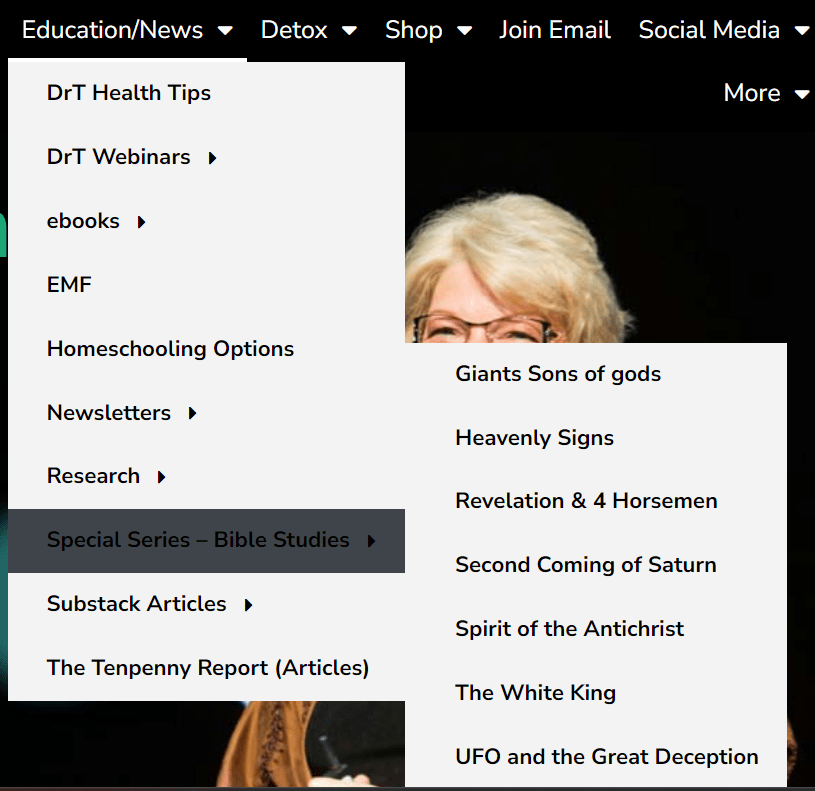
Tenpenny links out to several religious publications written by some interesting characters. There is a whole network of blogs, businesses, podcasts, and so on that discuss fundamentalist Christianity and conspiracy theories. One such example is Mike Spaulding, whose website contains the following disclaimer:
Dr. Mike Spaulding Ministries is part of the House of Spaulding Trust. The House of Spaulding Trust is not a 501(c)3 organization nor are any of the ministries affiliated with The Hosue [sic] of Spaulding Trust. We will not entangle ourselves with the Babylonian system of wickedness.
drmikespaulding.com
Note that while Spaulding refers to himself as “Dr,” he is not a DO nor an MD. He has a doctorate in Christian apologetics from an unaccredited Christian university. The reference to “the Babylonian system” comes from passages from the Book of Revelations that euphemistically talk about Babylon. American evangelical eschatology holds that Revelations describes modern economic systems. It is central to their belief that we are living in the End Times and that the Second Coming is coming any day now.
Tenpenny has spread other right-wing conspiracy theories and talking points, including sharing pro-Putin/anti-Ukraine propaganda on Twitter including antisemitic (((echo))) brackets. Finally– and I could go on –Tenpenny has also been associated with the “Digital Freedom Platform” and prominent conspiracy theorist David Icke, who unironically believes reptilian humanoids are secretly running the planet.
Why does it always come back to Illuminati mind control?
The book Deeper Insights into the Illuminati Formula (2010) is “the ultimate book revealing many many secrets and techniques of Illuminati Mind Control and a huge amount of unpublished information about what has really been going on for quite a while.” It discusses osteopathy and chiropractic and characterizes Still and Palmer as revealing secret occult information. (Palmer did outright claim to be revealing information from the spirit world.)
The secret cults continue their iron grip over the deep secrets of cranial manipulation. They continue their monopoly over who gets benefitted by cranial work, as well as who is destroyed by cranial work. In review, a number of sincere men have tried to develop Cranial Osteopathy including Dr. Andrew Still in 1874. Interestingly, as soon as each one of these men began discovering new techniques informed members of the occult world would take over their work, and insure that the work was kept within the confines of the occult world. For instance, Dr. Sutherland’s experiments revealed to him that Cranial Osteopathy could influence the way a person thought and their personality. In the book, With Thinking Fingers The Story of William Gamer Sutherland by his wife Adah Strand Sutherland, she writes, “It was Dr. Sutherland’s cherished dream that a day would come when the benefits to the mentally ill through the cranial component in osteopathy would be investigated to the satisfaction of scientific insistence; that it would be approved and made available institutionally, in the curriculums of osteopathic colleges as well as in the majority of private practices.” (Sutherland, Adah S. With Thinking Fingers. The Cranial Academy: Indianapolis, IN., p. 62). However, clever people in the occult world saw that Cranial Osteopathy could not only be used to help the mentally ill, but to control the minds of people.
Deeper Insights into the Illuminati Formula, as reproduced on genderi.org
The author is listed on Google simply as “Illuminati Formula.” They wrote another book, How the Illuminati Create an Undetectable Total Mind Controlled Slave, in 2008. If you read my post There is a psychiatrist who believes in the evil eye (and what that can tell us about psychology), this might be sounding a little familiar. That, too, was the story of a doctor who engaged in pseudoscience and conspiracy theories. Colin Ross, the subject of that post, was especially obsessed with mind control and secret satanic cults. Illuminati Formula’s 2008 book is about precisely one of Ross’s areas of expertise: the Illuminati creation of “Manchurian candidates” through artificially induced multiple personality disorder.
Now, mind control and the like are QAnon-level conspiracy theories. However, misinformation need not be extreme to be dangerous. While all this nuttiness is underlying Tenpenny’s position, all she really has to do to cause damage is sow seeds of doubt about the safety and effectiveness of vaccines. Ordinary Americans mostly don’t believe in mind control, but they have little scientific knowledge and can’t do more than take someone’s word for it whether vaccines are safe. They may refuse the vaccine if they have insufficient trust in allopathic medicine.
Damage control and responses
On June 9 [2021], the American Osteopathic Association became aware of the June 8 testimony provided by Sherri Tenpenny, DO, at the Ohio House of Representatives hearing on House Bill 248, the Enact Vaccine Choice and Anti-Discrimination Act.
Following careful review of the reported testimony, we find the statements included material misinformation, personal perspectives without support of evidence or scientific foundation, and are not consistent with the principles and practice of osteopathic medicine.
We support collegial debate based on professional differences of opinion on the appraisal of scientific literature. However, creating fear from non-scientific opinion without evidence is irresponsible, unconscionable, and undermines the public trust in the receipt of safe and efficacious medical care.
American Osteopathic Association statement regarding testimony on Ohio HB 248
In context, I don’t think the AOA is putting it strongly enough, but I think they were trying to be somewhat diplomatic. The comments on this statement might reveal why. Out of 8 comments, 5 were opposed to the AOA’s statement and 3 supported it. Of the 5 opposed, at least 4 are (or claim to be) DOs. One who shared his name publicly, Brian Nelson, once had his talk about osteopathic manipulation promoted by the AOA’s facebook. The AOA wants to support Nelson’s pseudoscience but not Tenpenny’s, while many both within and without the osteopath community (including both Nelson and Tenpenny) do not draw any such distinction. A paradox indeed.
Perhaps the AOA, or osteopathy in general, is caught between a rock and a hard place. Could osteopathic medicine excise the conspiracy theories and misinformation from within its ranks, or would that cause a mortal schism? Could osteopathy keep its pseudoscientific aspects without inviting science denial? Could osteopathy maintain any kind of identity without pseudoscience?
For the time being, it does not seem to be a crisis. Many doctors who believe in conspiracy theories, creationism, or other fabrications are still perfectly competent doctors. Medical professional associations and state medical boards appear to be (mostly) doing their jobs to promote and protect public health. If you have a choice between an MD or a DO, you should not feel concerned that the DO might be a quack. They are almost certainly a competent doctor. That being said, the future of osteopathy as a field doesn’t look bright to me.
References
American Osteopathic Association. AOA statement regarding testimony on Ohio HB 248. The DO.
American Osteopathic Association. What is a DO?
Davis, G.E. et al. (2023). Assessing patient experience of the tenets of osteopathic medicine. J Osteopath Med., 123(8), 371-378.
Eckberg, D. L. (1987). The dilemma of osteopathic physicians and the rationalization of medical practice. Soc Sci Med, 25(10), 1111-1120.
Fed Up Texas Chick (2023). Do you have a bad gut feeling? The Tenpenny Report.
Fed Up Texas Chick (2023). Something Is Terribly Wrong in Maui-Part 1. The Tenpenny Report.
Florida Department of Health (2023). State Surgeon General.
Greg Glaser (2023). Longitude Power Theory: Exodus to the Alaskan Yukon. The Tenpenny Report.
Hartman, S.E. (2006). Cranial osteopathy: its fate seems clear. Chiropr Man Therap 14, 10. https://doi.org/10.1186/1746-1340-14-10
Harriet Hall (2008). Wired to the Kitchen Sink: Studying Weird Claims for Fun and Profit. Quackwatch.
hbomberguy (2018). SOY BOYS: A MEASURED RESPONSE. YouTube.
hbomberguy (2021). Vaccines and Autism: A Measured Response. YouTube.
Howell, J. D. (1999). The Paradox of Osteopathy. New England Journal of Medicine, 341(19), 1465–1468.
Ian Richardson (2020). Fact check: UV light injections are not a common medical treatment — or a COVID-19 cure. USA Today.
Illuminati Formula (2008). How the Illuminati Create an Undetectable Total Mind Controlled Slave summary on Google Books.
Illuminati Formula (2010). Deeper Insight Into the Illuminati Formula as reproduced on genderi.org.
Johnson, S. M. and M. E. Kurtz (2002). Perceptions of philosophic and practice differences between US osteopathic physicians and their allopathic counterparts. Soc Sci Med., 55(12), 2141-2148.
Kiera Butler (2022). Pro-Putin Disinformation on Ukraine Is Thriving in Online Anti-Vax Groups. Mother Jones.
Mark Crislip (2013). Pump it up: osteopathic manipulation and influenza. Science-Based Medicine.
Michael Furci (2022). Never buy commercial mayonnaise again. Tenpenny Integrative Medical Center.
Mike Spaulding. About. drmikespaulding.com.
Owen Morgan (2023). Woman who claims the vaccine magnetizes people, sherri tenpenny, loses medical license (lol) finally. Owen’s Fireside Chat, YouTube.
State Medical Board of Ohio (2023). In the Matter of Sherri J. Tenpenny, D.O., Case No. 22-CRF-0168.
John Snyder (2014), Osteopathy in the NICU: False Claims and False Dichotomies. Science-Based Medicine.
The Cranial Academy (2005). Osteopathy in the cranial field. Internet Archive. https://web.archive.org/web/20060812040204/http://www.cranialacademy.com/cranial.html
U.S. Food & Drug Administration (2023). Letter to Joseph A. Ladapo, Surgeon General of Florida, regarding vaccine safety.
 thoughts on mind